Reactive power systems like STATCOMs play a quiet but essential role in keeping electrical grids stable, compensating for voltage fluctuations and maintaining power quality across transmission and distribution networks. Inside these systems, power electronics work continuously under demanding electrical loads, and the heat they generate is not a minor inconvenience. STATCOM thermal management is one of the most consequential engineering decisions in the design of any reactive power system, directly influencing performance, lifespan, and operational reliability.
As power electronics in reactive power systems grow more compact and handle higher switching frequencies, the thermal challenge intensifies. Getting the cooling strategy right from the start is far more cost-effective than managing failures or derating equipment later.
How heat buildup affects STATCOM performance
Excessive heat is the primary cause of degradation in power electronics, and STATCOMs are no exception. The insulated gate bipolar transistors (IGBTs) and other switching devices at the heart of a STATCOM generate significant heat during normal operation. When junction temperatures rise beyond design thresholds, switching losses increase, response times slow, and the risk of thermal runaway grows substantially.
The consequences extend beyond component damage. A STATCOM that cannot maintain its thermal operating window will begin to derate, reducing its reactive power output precisely when the grid may need it most. Voltage instability, reduced compensation capacity, and unplanned shutdowns are all downstream effects of inadequate thermal management in reactive power systems.
Cooling demands unique to STATCOM applications
STATCOMs present a distinct set of thermal challenges compared to other grid-connected power electronics. Unlike a simple rectifier or inverter, a STATCOM operates continuously in both capacitive and inductive modes, meaning its power modules cycle through varying load profiles throughout the day. This dynamic load behavior creates fluctuating heat generation that a cooling system must respond to quickly and consistently.
The physical design of STATCOM power stacks also concentrates heat in relatively small areas, requiring precise coolant flow distribution to avoid hot spots. Additionally, many installations are located in substations or industrial environments where ambient temperatures can vary widely, adding another variable in the thermal equation. The cooling solution must handle both steady-state and transient heat loads without compromising the electrical isolation requirements of the power electronics.
Closed-loop water cooling as the preferred solution
For STATCOM applications, closed-loop water cooling consistently outperforms air cooling in terms of heat transfer efficiency, reliability, and footprint. Water has a significantly higher thermal capacity than air, which means it can absorb and transport heat away from power modules far more effectively, even in compact installations.
A closed-loop system circulates deionized water through cold plates or heat exchangers mounted directly to the power modules, then transfers that heat to a secondary circuit or external heat rejection unit. Because the primary loop uses deionized water, it maintains the electrical isolation that high-voltage power electronics demand. This architecture keeps sensitive components clean, reduces the risk of corrosion, and provides stable, controllable cooling regardless of external conditions. For power electronics cooling in reactive power systems, closed-loop water cooling offers the most predictable and scalable thermal management path available.
Key factors in sizing a STATCOM cooling system
Correct sizing is where thermal management theory meets engineering practice. An undersized cooling system will struggle under peak load conditions, while an oversized system wastes capital and energy. Several interdependent factors must be evaluated together.
- Total heat dissipation: Calculated from the switching losses and conduction losses of the IGBT stacks across the full operating range of the STATCOM.
- Coolant flow rate and pressure drop: Determined by the thermal resistance of the cold plates and the allowable temperature rise across the power stack.
- Inlet water temperature: The cooling station must maintain coolant below the maximum allowable junction temperature even at peak ambient conditions.
- Redundancy requirements: Grid-critical applications often require N+1 pump or cooling circuit redundancy to guarantee uptime.
- Water quality management: Deionized water systems require resistivity monitoring and ion exchange to maintain the electrical isolation properties of the coolant over time.
Overlooking any one of these factors during the design phase typically results in either thermal derating or premature component wear, both of which undermine the investment in the STATCOM itself.
Long-term reliability and maintenance considerations
A well-designed STATCOM cooling system should require minimal intervention over its operational life, but that outcome depends on the quality of components and the thoughtfulness of the initial design. Pump reliability, seal integrity, and the condition of heat exchangers all influence how often maintenance is needed and how disruptive it will be.
Closed-loop systems with good water quality management tend to have low maintenance requirements compared to open or semi-open cooling architectures. Monitoring coolant conductivity, flow rate, and temperature differentials provides early warning of developing issues before they affect STATCOM availability. Features like eco-mode control, which adjusts pump and fan speed based on actual thermal demand, reduce wear on mechanical components and lower energy consumption over the system’s lifetime.
Investing in a cooling station designed specifically for demanding deionized water applications ensures that the materials, seals, and controls are matched to the chemical and electrical environment inside a STATCOM. This specificity pays dividends in reduced downtime and lower total cost of ownership across a system that may operate continuously for decades.
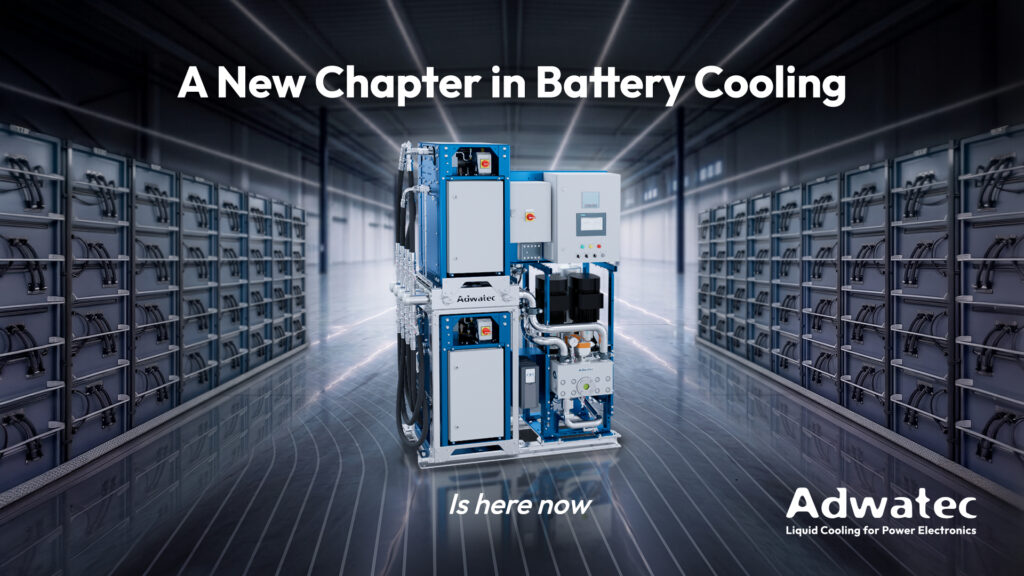
At Adwatec, we design and manufacture water cooling stations built for exactly these kinds of demanding grid applications. Our L series cooling stations are engineered for deionized water systems used in reactive power compensation equipment, including STATCOMs and Static Var Compensators. With more than 25 years of water cooling experience and solutions currently cooling 5,000 MW of power electronics worldwide, we bring both the technical depth and the practical track record that grid-scale thermal management requires. If you are working through the cooling requirements for a STATCOM project, we are glad to help you find the right solution.
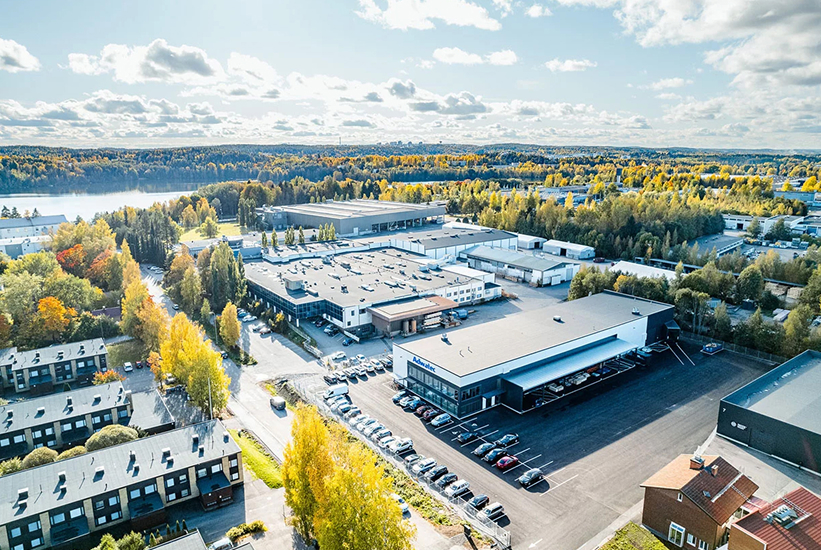
About Adwatec
Adwatec is a water technology company specializing in water cooling for power electronics. We serve clients across various sectors, including Marine, Electrical Grid and Heavy Industry, on a global scale. With more than two decades of expertise and strong focus in R&D, we offer our clients proven, state-of-the-art solutions.
Our mission is to boost Sustainability in our products, operations and customer’s applications. In order to achieve this our deep knowledge of various customer applications is essential and we are not afraid to share the cooling aspects in these. Adwatec products are modular which allows us to customize the cooling solutions to customer specific application needs. Standard modules in high volumes, small size and low maintenance result in competitive lifecycle costs. Adwatec products installed onboard more than 500 vessels globally is a reference that we are truly proud of!