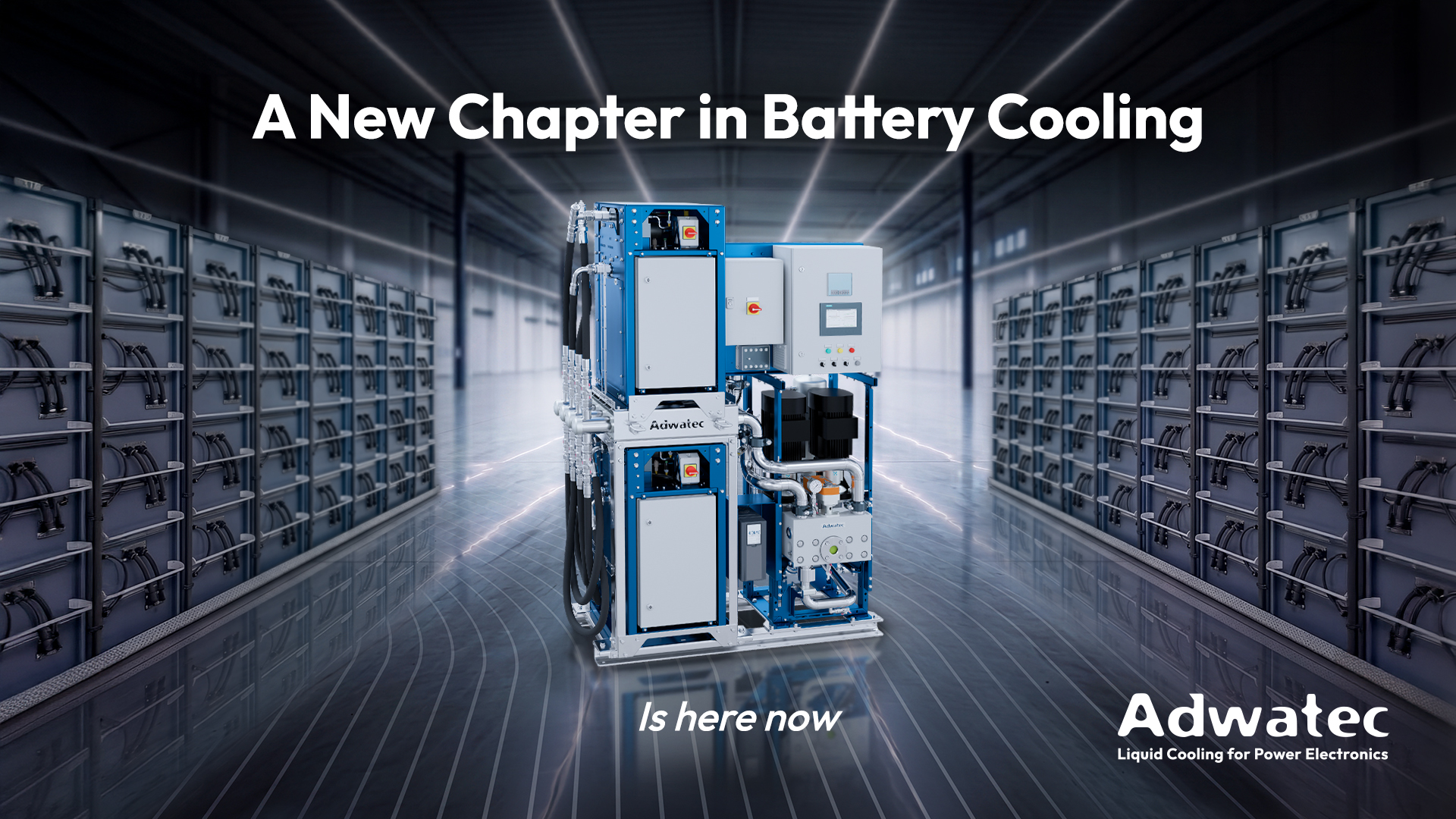
A battery cooling solution for electric vessels is a closed-loop liquid cooling system that regulates the temperature, flow, and pressure of coolant circulating through a vessel’s battery modules. It keeps battery cells within their optimal thermal operating range, preventing overheating and degradation. The sections below unpack how these systems work, what they contain, and what to look for when specifying one.
How does battery cooling work on electric vessels?
Battery cooling on electric vessels works by circulating a liquid coolant through channels or plates in direct thermal contact with the battery modules. A cooling station controls the coolant’s temperature, flow rate, and pressure in a closed loop, continuously removing heat generated during charging and discharging cycles before returning conditioned coolant to the batteries.
The closed-loop architecture is essential in marine environments. It isolates the battery system from technical water, humidity, and contaminants that would otherwise accelerate corrosion or create electrical hazards. Heat absorbed by the coolant is transferred to the vessel’s technical water system, which acts as the primary heat sink. The cooling station manages this exchange automatically, adjusting output to match the thermal load in real time.
Why do electric vessel batteries need active cooling?
Electric vessel batteries need active cooling because lithium-based battery chemistry generates significant heat during both charging and discharging, and cell performance degrades rapidly outside a narrow temperature window. Passive or ambient cooling cannot reliably maintain the precise thermal conditions that modern marine battery systems require across all operating conditions.
Temperature directly affects battery capacity, cycle life, and safety. Cells that run too hot age faster and carry a higher risk of thermal runaway. Cells that operate too cold lose usable capacity and charge acceptance. Active liquid cooling maintains the battery within its ideal range regardless of ambient temperature, load intensity, or how long the vessel has been operating, which is especially important during high-power maneuvers or fast charging at port.
What are the main components of a marine battery cooling system?
A marine battery cooling system typically consists of a cooling station, a chiller module, and the coolant distribution pipework connecting to the battery modules. Together, these components form a closed loop that delivers precisely conditioned coolant to the battery and returns it for reconditioning.
- Cooling station: The central unit that houses the pumps, heat exchanger, controls, and monitoring instrumentation. It manages coolant temperature, flow, and pressure automatically.
- Chiller module: A refrigeration-based component that actively lowers coolant temperature below what the vessel’s technical water can achieve alone. This is critical for battery systems that require lower coolant temperatures than standard cooling circuits provide.
- Sensors and controls: Monitor temperature, pressure, and flow at key points, feeding data to the control system that adjusts pump speed and chiller output in real time.
Our CCE Classic Series with Chiller integrates all of these elements into a modular, marine-grade rack designed for both newbuild and retrofit installations.
What coolant is used in electric vessel battery cooling systems?
Marine battery cooling systems use a water-glycol mixture as the primary coolant. The glycol content is adjusted to match the operating environment, providing freeze protection in cold climates while maintaining the thermal conductivity and flow properties the system needs.
The glycol additive also contains corrosion inhibitors that protect metal components throughout the cooling circuit, extending service life in the demanding marine environment.
How is a marine battery cooling system sized correctly?
A marine battery cooling system is sized by calculating the heat load the battery produces during its operating scenarios, then selecting a cooling station and chiller capacity that can reliably remove that heat while maintaining the target coolant temperature. Other key inputs include battery power rating, charge and discharge rates, ambient conditions, and the vessel’s technical water supply temperature.
Oversizing wastes space and energy and is not cost efficient; undersizing leads to thermal throttling or premature battery degradation. A correctly sized system also accounts for redundancy requirements. In critical marine applications, modular architectures with multiple independent chiller units allow the system to continue operating at reduced capacity if one unit requires maintenance, without shutting down the entire cooling circuit. Scalability matters too. Battery capacity on electric vessels can grow over the vessel’s lifetime as technology improves or operational requirements change. A modular cooling platform can be expanded by adding chiller units rather than replacing the entire system, protecting the initial investment.
Read more about the solution and explore its key features on the product page.