STATCOM systems sit at the heart of modern electrical grid infrastructure, quietly managing reactive power and stabilizing voltage across utility and industrial networks. Inside each system, power electronic valves generate significant heat losses during operation, and without an effective cooling strategy, those components face accelerated degradation or failure. Closed-loop cooling has become the standard approach for protecting STATCOM power electronics, and understanding why reveals a great deal about what reliable grid performance actually requires.
Because STATCOM systems are considered critical infrastructure, the stakes for thermal management are high. Required cooling power can range from a few hundred to several thousand kilowatts, and coolant flow rates can span hundreds to several thousand liters per minute. Getting the cooling system right is not optional — it is foundational to system longevity.
The thermal challenge inside a STATCOM
Every STATCOM installation includes transformers, reactors, busbars, and power electronic valves, typically built around IGBT or IGCT components. These valves are where the real thermal challenge begins. During operation, they produce continuous heat losses that must be removed efficiently to keep junction temperatures within safe operating limits.
What makes this particularly demanding is the scale and the criticality. A STATCOM serving a utility network may run continuously for decades, and even brief thermal excursions can degrade semiconductor performance over time. The cooling system must handle peak loads reliably while also adapting to varying ambient conditions across seasons and climates.
How closed-loop cooling circuits work in power electronics
A closed-loop cooling circuit circulates coolant in a sealed loop through the heat sinks of power electronic valves, absorbing heat at the source and transferring it away from sensitive components. The heated coolant then passes through a heat exchanger, where the thermal energy is released, typically to outdoor ambient air via a water-to-air heat exchanger. Where a site has an available technical water supply, a water-to-water heat exchanger can serve the same purpose.
The closed-loop design is essential for STATCOM applications for a specific electrical reason: the power electronic valves operate at high voltage potential. This means the coolant circulating through them must maintain low electrical conductivity at all times. In a closed system, coolant quality can be actively monitored and controlled, whereas an open circuit introduces too many variables to guarantee the conductivity levels that safe operation demands.
Key protection benefits for STATCOM components
Beyond the electrical safety advantage, closed-loop liquid cooling delivers a range of protection benefits that directly extend component life. Because the system is sealed, coolant is not exposed to atmospheric contaminants, biological growth, or particulates that could foul heat sinks or corrode internal surfaces over time.
Consistent coolant chemistry also means that IGBT and IGCT components experience stable thermal conditions rather than the variability that open systems introduce. Stable temperatures reduce thermal cycling stress on solder joints and bond wires, which are common failure points in high-power electronics. The result is a measurable improvement in long-term component reliability, which matters enormously when a system is expected to operate for several decades.
Cooling station design for STATCOM applications
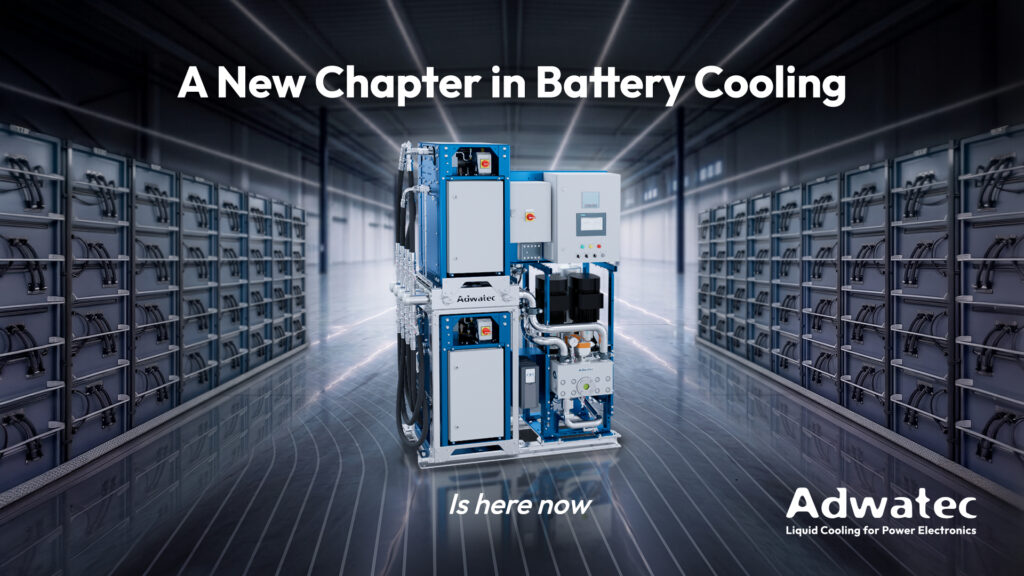
Translating the principles of closed-loop cooling into a practical STATCOM installation requires careful station design. The cooling station must be sized to handle the full range of heat loads the system will encounter, while also incorporating redundancy to ensure that a single component failure does not interrupt grid support functions.
Redundancy is a central design requirement for STATCOM cooling. Given the critical infrastructure role these systems play, cooling stations are typically built with backup pump configurations and monitoring systems that can detect anomalies before they escalate. Our grid cooling solutions are designed with exactly this operational context in mind, combining modular architecture with the reliability margins that utility and industrial operators expect. Compact, correctly sized designs also help minimize energy consumption during normal operation, which supports both cost efficiency and sustainability goals.
Maintaining long-term reliability in grid environments
A STATCOM cooling system that performs well on day one must continue performing well a decade or two later. Long-term reliability in grid environments depends on several interconnected factors: coolant quality management, preventive maintenance access, and the ability to service or replace components without extended system downtime.
Coolant conductivity monitoring is a practical cornerstone of ongoing reliability. As the coolant circulates through de-ionized water circuits, its conductivity must be checked and maintained within specified limits to protect the power electronics. Cooling stations designed for STATCOM applications should make this monitoring straightforward and integrate it into standard maintenance routines. Easy access to pumps, sensors, and heat exchangers reduces the time and cost of scheduled maintenance, which compounds in value over a multi-decade service life. Investing in a well-engineered STATCOM cooling system from the outset is ultimately the most cost-effective path to the long-term grid performance these installations are built to deliver.
At Adwatec, we design and manufacture water cooling stations built for exactly these kinds of demanding grid applications. Our L series cooling stations are engineered for deionized water systems used in reactive power compensation equipment, including STATCOMs and Static Var Compensators. With more than 25 years of water cooling experience and solutions currently cooling 5,000 MW of power electronics worldwide, we bring both the technical depth and the practical track record that grid-scale thermal management requires. If you are working through the cooling requirements for a STATCOM project, we are glad to help you find the right solution.