STATCOM systems sit at the heart of modern electrical grid stability, managing reactive power and voltage fluctuations in real time. The power electronics inside these systems, typically IGBT or IGCT valve stacks, generate substantial heat under continuous operation. Without reliable cooling for STATCOM applications, that heat becomes a direct threat to uptime, component integrity, and ultimately the stability of the grid itself.
Understanding why STATCOM cooling matters starts with the physics of power electronics and ends with system design choices that determine whether a cooling station performs for years or becomes a maintenance burden. Here is what every engineer and asset owner should consider.
How thermal stress shortens STATCOM component lifespan
Every switching cycle in a power electronic valve generates heat, and that heat accumulates across the junction layers of IGBT or IGCT modules. When junction temperatures rise beyond design thresholds, even briefly, thermal cycling accelerates material fatigue in solder bonds, bond wires, and substrate layers.
Over time, repeated thermal expansion and contraction cause micro-cracks that degrade electrical performance before any visible failure occurs. The consequence is a shortened component lifespan that arrives well ahead of the decades-long service life STATCOM operators expect. Keeping junction temperatures stable and within specification is therefore not just a performance goal but a longevity strategy.
What happens when STATCOM cooling fails
A cooling failure in a STATCOM installation does not produce a gradual performance decline. It triggers a rapid sequence: overtemperature protection trips the valve stack, the system goes offline, and the grid loses its reactive power compensation at precisely the moment it may need it most.
Because STATCOM systems are considered critical infrastructure, an unplanned outage carries consequences beyond the equipment itself. Grid voltage instability, penalties under network agreements, and emergency maintenance under pressure are all real outcomes. Redundancy in the cooling circuit is not optional in this context; it is a fundamental design requirement for any system expected to deliver high availability.
Key requirements for cooling systems in STATCOM applications
STATCOM cooling systems operate under demands that distinguish them clearly from standard industrial cooling. Required cooling capacity can range from a few hundred to several thousand kilowatts, while coolant flow rates may reach thousands of liters per minute depending on system size.
Two requirements stand out above the rest. First, low coolant conductivity is non-negotiable because power electronic valves operate at high voltage potential, and any conductive coolant creates leakage current paths that compromise both safety and equipment integrity. Second, high system redundancy must be built in from the start, with backup pump circuits and monitoring systems that detect anomalies before they escalate into shutdowns.
How closed-loop water cooling meets STATCOM demands
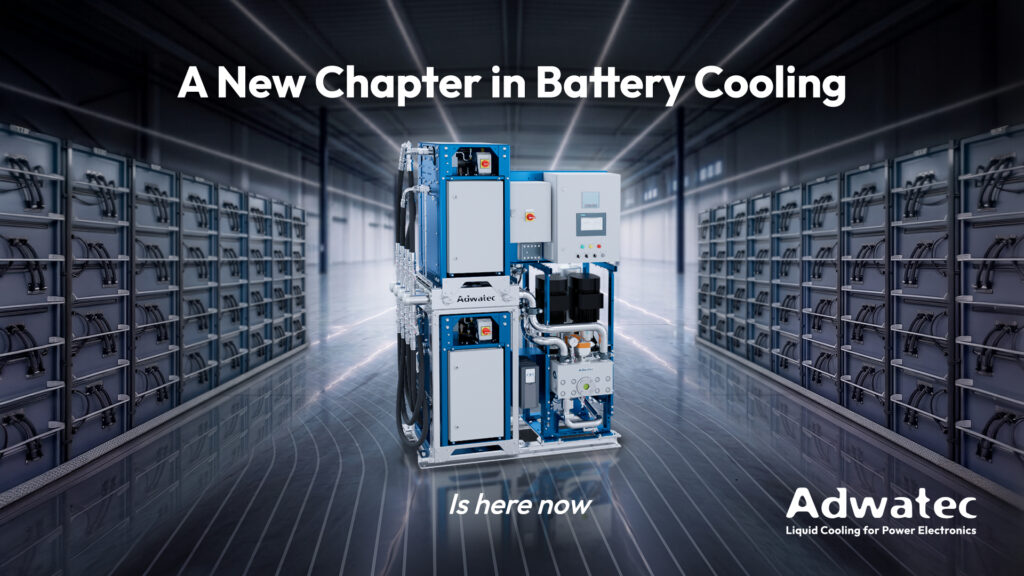
Closed-loop liquid cooling for STATCOM is the established solution that addresses both the thermal load and the conductivity challenge simultaneously. Coolant circulates through the valve heat sinks, absorbs heat, and transfers it to ambient outdoor air via a water-to-air heat exchanger. Where a facility has a technical water circuit available, a water-to-water heat exchanger offers an efficient alternative.
The closed-loop design keeps the coolant isolated from external contamination, which is essential for maintaining the low conductivity that high-voltage valve stacks demand. It also enables precise flow and temperature control, which supports stable junction temperatures across varying load conditions. This is the architecture we design our L series cooling stations around, specifically for demanding deionized water applications in grid installations such as STATCOM and SVC systems.
Cooling system design choices that affect long-term reliability
With a service life expectancy measured in decades, the design decisions made at the outset of a STATCOM project have compounding effects on total cost of ownership. Correct sizing matters enormously: an oversized cooling station wastes energy continuously, while an undersized one runs at its limits and degrades faster under peak load conditions.
Maintainability deserves equal attention. Systems with accessible components, standardized parts, and clear monitoring outputs reduce both planned maintenance time and the risk of extended unplanned downtime. Features such as eco-mode control, which reduces energy consumption during low-load periods, extend service intervals and lower operating costs over the full system lifetime. Choosing a cooling station for power electronics that is modular and configurable from the start means the cooling architecture can adapt as grid requirements evolve, rather than becoming a fixed constraint.