Water cooling achieves superior efficiency for high power density equipment through direct thermal contact, higher heat capacity, and precise temperature control. Unlike air cooling, liquid systems can absorb and transfer significantly more heat while maintaining stable operating temperatures, reducing energy consumption by up to 40% compared to traditional cooling methods.
Inadequate cooling is destroying your power electronics faster than expected
High power density equipment operating without proper thermal management experiences accelerated component degradation, unexpected shutdowns, and costly repairs. When semiconductors exceed optimal temperature ranges, their lifespan decreases exponentially while efficiency drops dramatically. The solution lies in implementing liquid cooling systems that maintain consistent temperatures and protect your investment through superior heat dissipation capabilities.
Energy waste from inefficient cooling is inflating your operational costs
Traditional air cooling systems consume excessive energy while struggling to maintain adequate temperatures, creating a double burden of high electricity bills and poor performance. Fans work overtime, HVAC systems strain to compensate, and equipment operates below peak efficiency. Switching to water cooling eliminates this waste by providing targeted thermal management that reduces overall energy consumption while improving system performance.
What is high power density equipment and why does it need special cooling?
High power density equipment generates concentrated heat loads that exceed the cooling capacity of conventional air systems. These devices pack significant electrical power into compact spaces, creating thermal challenges that require advanced cooling solutions to maintain optimal performance and prevent damage.
Power electronics like inverters, converters, and energy storage systems exemplify high power density equipment. These components handle substantial electrical loads while occupying minimal space, resulting in heat generation that can quickly overwhelm standard cooling methods. Without adequate thermal management, these systems experience reduced efficiency, shortened lifespans, and potential failures.
The challenge intensifies in applications where reliability is critical. Marine propulsion systems, grid-scale energy storage, and industrial power conversion equipment cannot afford thermal-related downtime. Special cooling becomes essential when equipment must operate continuously under varying load conditions while maintaining precise temperature control for optimal performance.
How does water cooling work compared to air cooling systems?
Water cooling transfers heat through direct liquid contact with heat-generating components, while air cooling relies on forced convection through fans and heat sinks. Water’s superior thermal properties allow it to absorb and transport heat more effectively than air, resulting in better temperature control and system efficiency.
The fundamental difference lies in thermal capacity. Water can absorb approximately 4,000 times more heat per unit volume than air, making it exceptionally effective for high-density cooling applications. Liquid cooling systems circulate coolant directly to heat sources, removing thermal energy efficiently and transporting it to external heat exchangers for dissipation.
Air cooling systems face limitations in high power applications. As heat loads increase, air systems require larger fans, more complex ductwork, and higher airflow rates. This approach becomes impractical for compact installations and struggles to maintain uniform temperatures across multiple components. Water cooling overcomes these constraints through precise flow control and targeted heat removal.
What makes water cooling more energy efficient than other methods?
Water cooling achieves higher energy efficiency through reduced pumping power requirements, elimination of high-speed fans, and precise temperature control that optimizes component performance. The system’s ability to maintain lower operating temperatures also reduces thermal losses and improves overall electrical efficiency.
Pump energy consumption in liquid cooling systems typically represents a fraction of the power required by equivalent air cooling fans. Water’s high thermal conductivity means smaller temperature differences are needed to achieve effective heat transfer, reducing the energy required to move coolant through the system. This efficiency advantage becomes more pronounced as power levels increase.
Temperature stability provided by water cooling enables power electronics to operate at optimal efficiency points. When components run cooler and more consistently, electrical losses decrease and performance improves. This creates a compound efficiency benefit where both the cooling system and the cooled equipment consume less energy while delivering better results.
Which industries benefit most from water cooling solutions?
Marine, electrical grid, and heavy industrial sectors benefit most from water cooling due to their high power density requirements, space constraints, and reliability demands. These industries operate power electronics in challenging environments where conventional cooling methods prove inadequate for maintaining optimal performance.
The marine industry particularly benefits from liquid cooling solutions due to space limitations and harsh operating conditions. Ship systems require compact, reliable cooling for propulsion electronics, energy storage, and auxiliary power systems. We primarily utilize the vessel’s technical water system for cooling, with seawater serving as an alternative only when technical water is unavailable. Salt air environments and vibration make air cooling less practical, while water cooling provides robust thermal management in confined spaces.
Electrical grid applications increasingly rely on water cooling for static var compensators, energy storage systems, and power conversion equipment. Grid-scale installations demand high reliability and efficiency, making liquid cooling essential for maintaining stable power quality. The ability to operate in outdoor environments with varying ambient conditions makes water cooling particularly valuable for utility applications.
What are the key advantages of modular water cooling systems?
Modular water cooling systems offer scalability, customization flexibility, and simplified maintenance through standardized components that can be configured for specific applications. This approach reduces costs, shortens installation time, and enables easy expansion or modification as cooling requirements change.
Scalability represents the primary advantage of modular designs. Systems can start with basic cooling capacity and expand through additional modules as power requirements grow. This flexibility proves valuable in applications where future expansion is planned or where cooling needs vary seasonally or operationally.
Customization capabilities allow modular systems to address unique installation requirements without complete redesign. Standard modules can be combined and configured to match specific power levels, space constraints, and environmental conditions. This approach reduces engineering time and costs while ensuring optimal performance for each application.
Maintenance benefits from modular design through component standardization and accessibility. Individual modules can be serviced or replaced without affecting the entire system, minimizing downtime and reducing maintenance complexity. Spare parts inventory is simplified when multiple systems share common modular components.
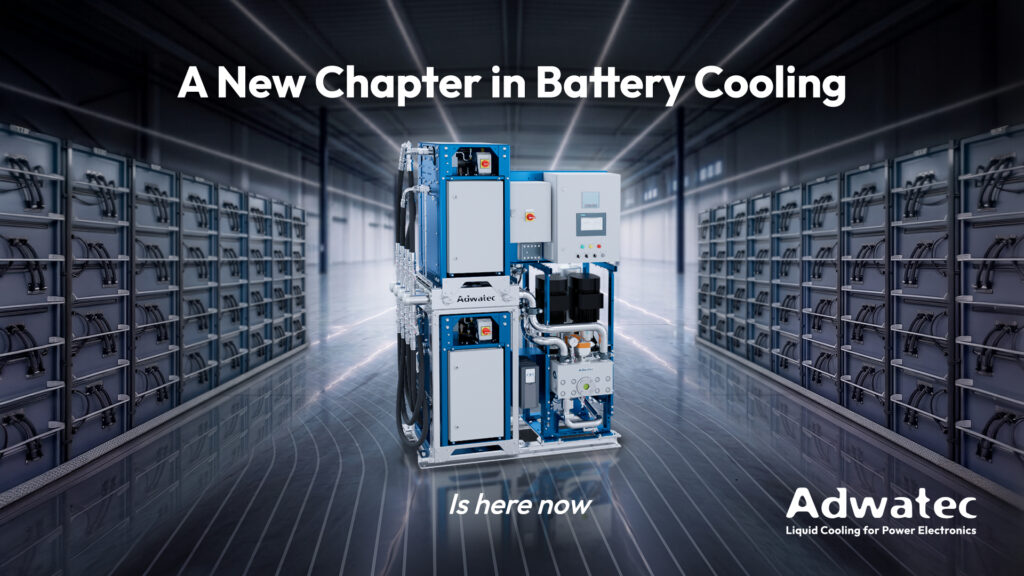
At Adwatec, we specialize in providing efficient water cooling solutions for power electronics across various demanding applications. The marine applications we provide cooling solutions for include propulsion systems, thrusters, winches, and battery and energy storage systems. We provide solutions for both essential and non-essential use. Our modular approach ensures optimal thermal management tailored to your specific requirements. Learn why our water cooling expertise makes the difference for your critical power electronics applications.