Active battery cooling uses a powered system to actively regulate coolant temperature and flow around battery cells, while passive battery cooling relies on natural heat dissipation through materials, fins, or phase-change elements without any powered intervention. The right choice depends primarily on the heat load the battery system generates during operation. The sections below unpack how each method works, where each excels, and how to choose between them.
How does active battery cooling actually work?
Active battery cooling works by circulating a coolant, typically water or a water-glycol mixture, through channels or cold plates in direct thermal contact with battery cells. A pump drives the coolant through a closed loop, and a chiller or heat exchanger removes the absorbed heat before the cooled fluid returns to the battery. The system continuously monitors and adjusts temperature, flow rate, and pressure to keep cells within their optimal thermal window.
The key advantage of this approach is precise, responsive control. When a battery discharges rapidly or charges at high power, heat generation spikes quickly. An active system can respond in real time, preventing localized hot spots that accelerate cell degradation. Water-based active cooling is particularly effective because water carries heat away far more efficiently than air, making it the preferred choice for high-density battery packs in demanding applications.
What are the main types of passive battery cooling?
Passive battery cooling methods remove heat without powered components. The three most common types are natural air convection, heat-conductive materials, and phase-change materials (PCMs). Natural convection relies on airflow across the battery surface. Thermally conductive pads or spreaders transfer heat away from cells toward a heat sink. PCMs absorb heat as they change state from solid to liquid, buffering temperature spikes temporarily.
Each passive method has a ceiling on how much heat it can manage. Natural convection works for low-power or intermittent applications where heat generation is modest. Conductive materials and PCMs can handle somewhat higher loads but eventually saturate. Once the thermal load exceeds what passive dissipation can handle, cell temperatures rise uncontrollably, shortening battery life and creating safety risks.
Which battery cooling method handles high power loads better?
Active battery cooling handles high power loads significantly better than passive methods. When batteries operate at high charge and discharge rates, the heat generated per unit of time can far exceed what passive dissipation can remove. Active systems, especially liquid-cooled ones, have the thermal capacity and controllability to keep cell temperatures stable even under sustained heavy loads.
In marine and industrial energy storage applications, where batteries may support propulsion, grid stabilization, or peak shaving at high power levels, passive cooling is rarely sufficient. These environments demand continuous, reliable thermal management across varying load profiles. Active liquid cooling provides the combination of high heat removal capacity and precise temperature regulation that protects battery performance and longevity in these conditions.
What are the cost and complexity trade-offs between the two?
Passive battery cooling has lower upfront cost and simpler installation because it requires no pumps, chillers, sensors, or control systems. Active battery cooling involves greater initial investment and more complex integration, but it delivers a lower total cost of ownership in high-demand applications by protecting battery health and reducing premature degradation.
The complexity of an active system also brings maintenance considerations: pumps, seals, and chillers require periodic inspection. However, modern modular cooling architectures address this directly. For example, systems built around independent chiller modules allow a single unit to be replaced without shutting down the entire cooling circuit, which keeps availability high and maintenance straightforward. For applications where battery replacement costs are significant, the protective value of active cooling typically outweighs its added complexity.
When should a battery system use active cooling instead of passive?
A battery system should use active cooling when it operates at high continuous power, charges or discharges rapidly, runs in an environment with limited ambient airflow, or requires tight temperature control to meet performance and safety specifications. If any of these conditions apply, passive methods will not reliably maintain the thermal envelope that modern lithium-based battery chemistries require.
Practical triggers for choosing active cooling include:
- Battery systems exceeding a few kilowatts of continuous power dissipation
- Applications requiring coolant temperatures below what ambient air or technical water can naturally provide
- Marine and shore-based energy storage systems where uptime and safety are critical
- Systems subject to regulatory or classification requirements that mandate controlled thermal management
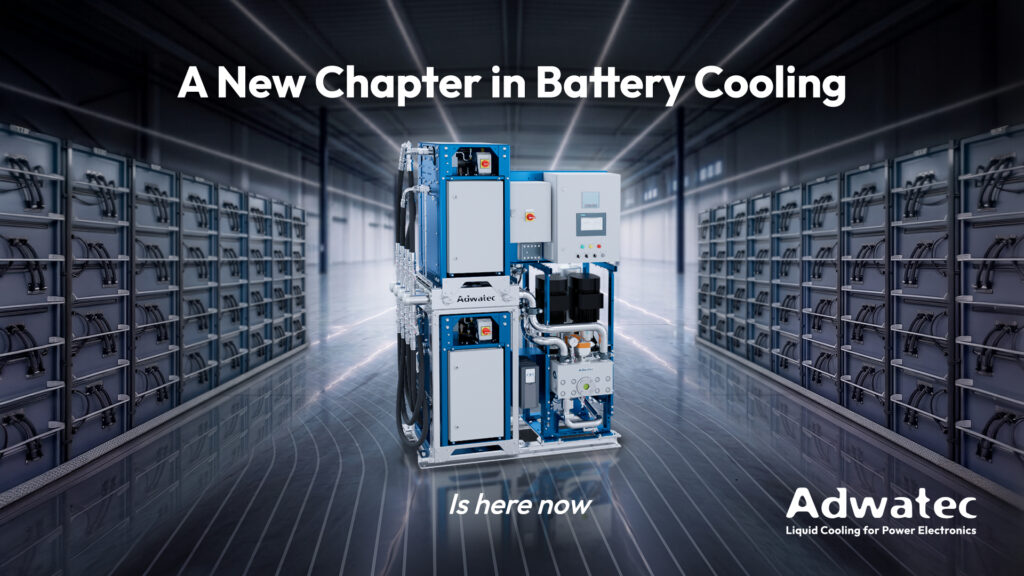
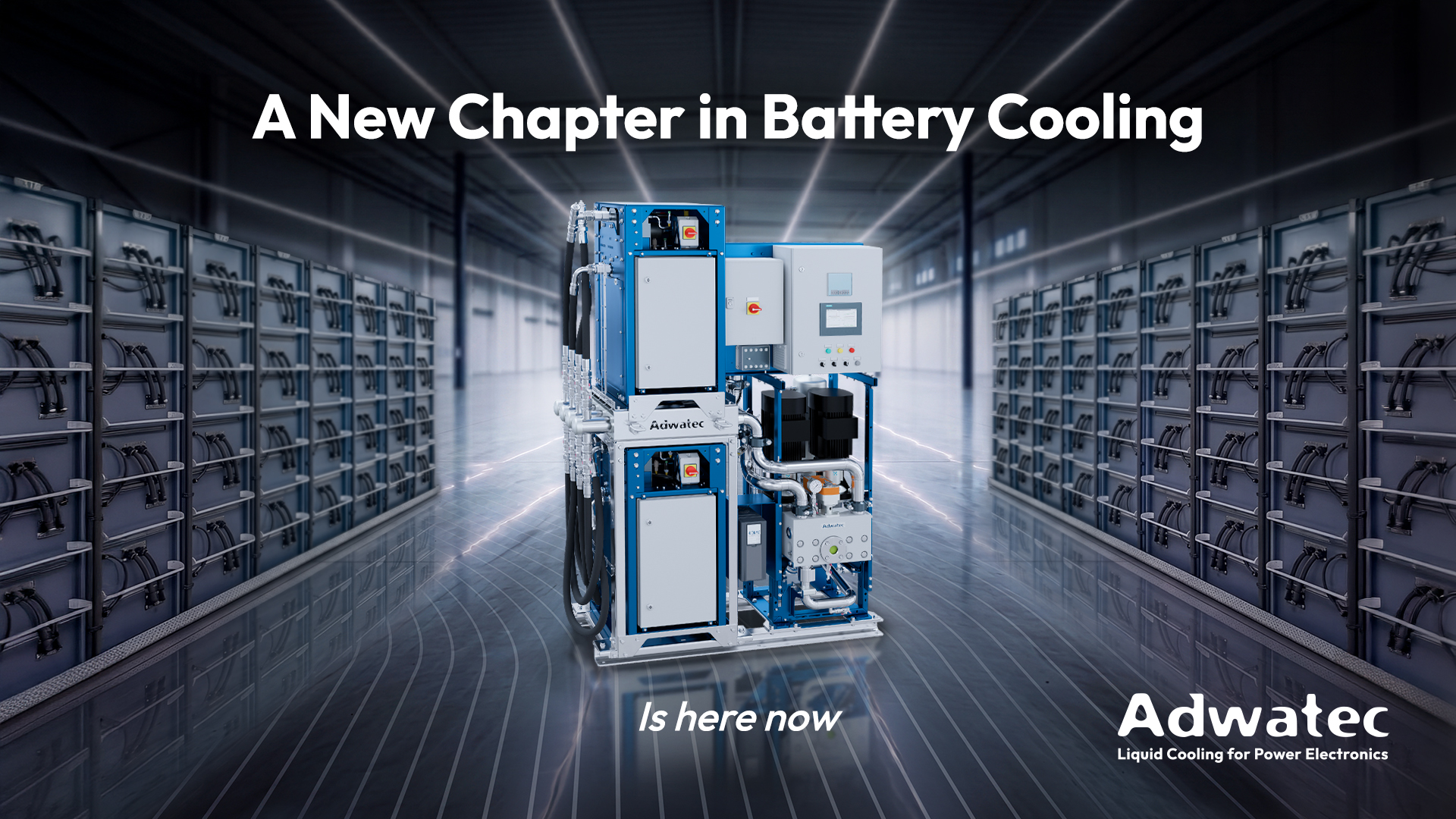
Our CCE Classic Series with Chiller is designed precisely for these scenarios, providing precise control of coolant temperature, flow, and pressure for hybrid and fully electric vessels as well as shore-based energy storage systems. Read more about the solution and explore its key features on the product page.