Closed-loop battery cooling systems protect battery performance, extend lifespan, and maintain stable operating temperatures by circulating coolant in a sealed circuit that never contacts outside air or contaminants. This makes them the preferred thermal management approach for lithium-ion batteries and other electrochemical energy storage systems used in marine, industrial, and grid applications. The sections below address the most common questions about how these systems work and what to look for when selecting one.
How does a closed-loop cooling system protect battery performance?
A closed-loop cooling system protects battery performance by maintaining coolant purity and temperature stability within a sealed circuit. Because the coolant never mixes with external air or water, there is no risk of contamination, corrosion, or mineral buildup that could degrade heat transfer efficiency over time. The result is consistent, predictable thermal management under varying load conditions.
Batteries are sensitive to temperature fluctuations. When cells run too hot, electrochemical degradation accelerates. When they run too cold, internal resistance rises and usable capacity drops. A closed-loop battery cooling system addresses both extremes by continuously circulating coolant at precisely controlled temperature, pressure, and flow rates. This tight control keeps every cell in the pack operating within its optimal thermal window, which directly translates to more stable output and fewer performance dips during high-demand cycles.
What makes closed-loop cooling better than open-loop for batteries?
Closed-loop cooling is better than open-loop cooling for batteries because it uses a sealed, recirculating circuit that keeps coolant clean, prevents contamination, and allows precise temperature regulation. Open-loop systems draw coolant from an external source, which introduces variability in temperature and quality that is difficult to control and potentially harmful to sensitive battery chemistry.
In an open-loop arrangement, coolant quality depends entirely on the source. For battery thermal management, this unpredictability is a significant liability. A closed-loop system eliminates that variable entirely. The coolant is conditioned, monitored, and recirculated continuously, so the system always operates with fluid that meets the exact specifications the battery manufacturer requires. For deionized water applications in particular, maintaining low conductivity is critical to safety, and only a closed loop can reliably sustain those conditions over the long term.
How does closed-loop cooling extend battery lifespan?
Closed-loop cooling extends battery lifespan by preventing the thermal stress that accelerates cell degradation. Repeated exposure to high temperatures causes lithium-ion cells to lose capacity faster, while temperature imbalances across a battery pack cause uneven aging that shortens the life of the entire system. Precise, consistent cooling reduces both risks significantly.
Beyond heat management, a closed-loop system also protects battery components from moisture, particulates, and chemical contaminants that could corrode connectors or compromise insulation. Because the coolant circuit is sealed, the battery environment remains stable regardless of what is happening outside the enclosure. In demanding applications such as electric vessels or shore-based energy storage systems, where batteries may run continuously for years, this protection has a compounding effect on overall system longevity.
What types of batteries benefit most from closed-loop liquid cooling?
Lithium-ion battery systems benefit most from closed-loop liquid cooling, particularly large-format packs used in electric and hybrid marine vessels, stationary energy storage systems, and heavy industrial equipment. These applications involve high charge and discharge rates that generate significant heat, making passive or air-based cooling insufficient for maintaining safe operating temperatures.
The larger the battery system and the more demanding the duty cycle, the stronger the case for liquid cooling in a closed loop. Shore-based energy storage installations supporting grid stabilization, for example, may cycle continuously and must maintain tight temperature tolerances to meet performance guarantees. Similarly, battery systems aboard electric vessels face vibration, humidity, and variable ambient conditions that make a sealed, liquid-cooled circuit the most reliable thermal management choice available.
What should you look for in a closed-loop battery cooling station?
When selecting a closed-loop battery cooling station, prioritize precise temperature control, scalable cooling capacity, redundancy, and compatibility with the battery system’s coolant requirements. A well-designed station should maintain consistent coolant temperature, flow, and pressure across the full operating range of the battery without requiring constant manual adjustment.
Key features to evaluate include:
- Active temperature regulation: Chiller modules that can deliver lower coolant temperatures than ambient technical water provides, ensuring optimal conditions even in warm environments
- Redundancy: Multiple independent cooling units so that a single failure does not interrupt battery operation
- Scalability: A modular architecture that can be configured to match current battery capacity and expanded as needs grow
- Energy efficiency: Variable frequency drive (VFD) control on chillers and pumps to match output precisely to demand
- Environmental suitability: Marine-grade construction and vibration-tested components for installations in demanding physical environments
- Ease of maintenance: Designs that allow individual components to be replaced without taking the entire system offline
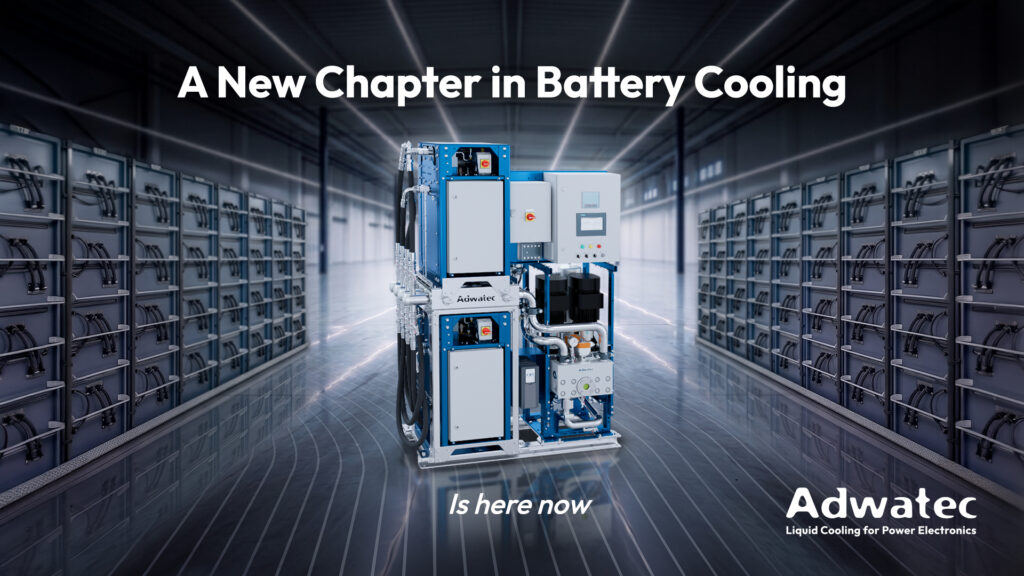
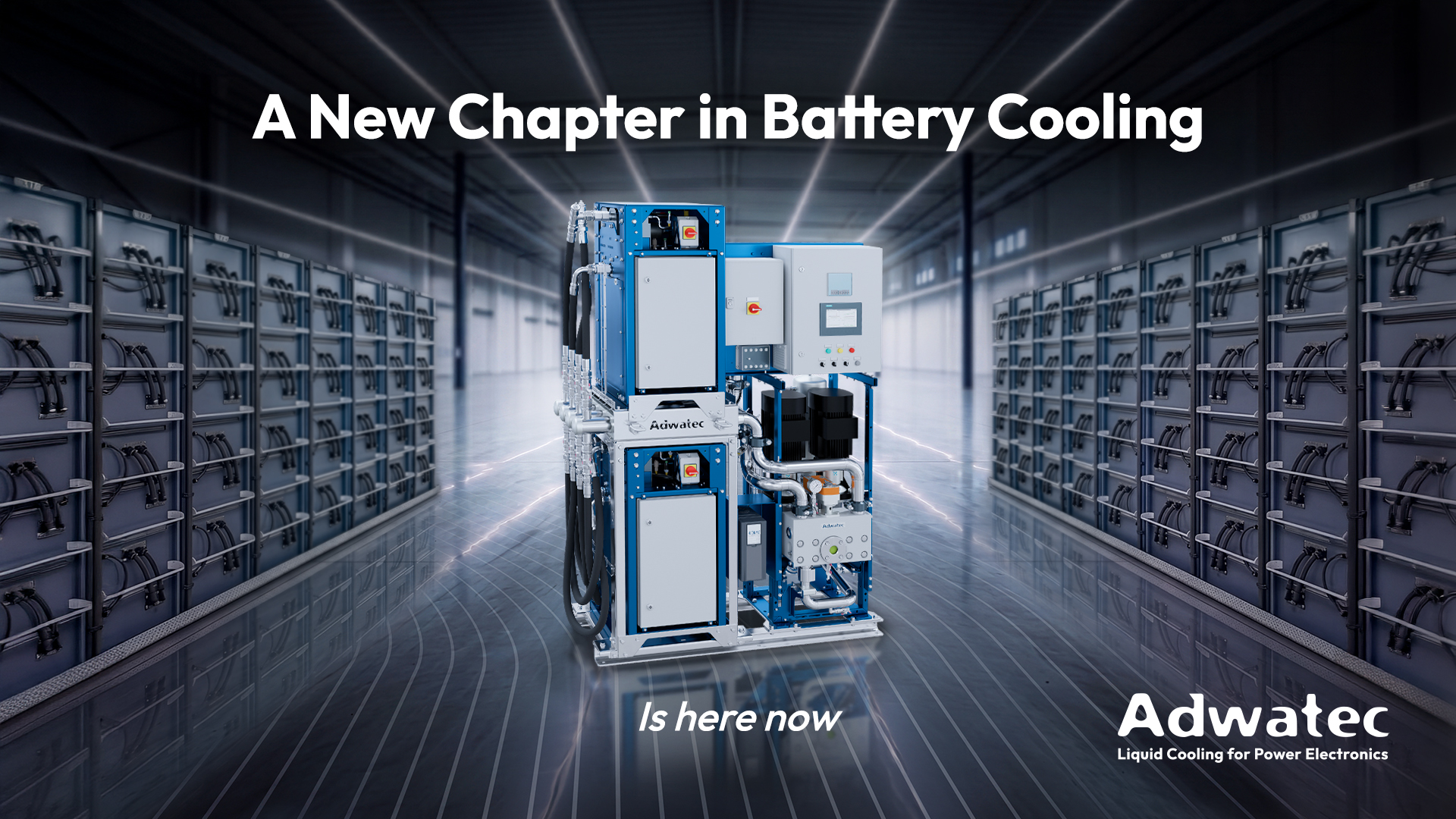
Our CCE Classic Series with Chiller is built around exactly these principles, offering a scalable closed-loop platform with VFD-controlled chiller modules, modular redundancy, and marine-grade construction suited to both vessel and shore-based energy storage applications. Read more about the solution and explore its key features on the product page.