A closed-loop water cooling system improves reliability on ships by isolating the coolant from the marine environment entirely, preventing contaminants, salinity, and moisture from reaching sensitive power electronics. Because the same coolant circulates continuously through a sealed circuit, thermal conditions stay stable and predictable regardless of what is happening outside the vessel. The sections below address the most common questions about how these systems work and why they matter at sea.
What makes closed-loop cooling different from open-loop systems on ships?
A closed-loop ship cooling system recirculates the same carefully managed coolant indefinitely through a sealed circuit, while an open-loop system draws water in, passes it through the system, and discharges it. This single difference has significant consequences for reliability, maintenance, and component protection in a marine environment.
Open-loop systems introduce a continuous stream of potential contaminants and create dependency on the quality and availability of the external water source at any given time. On a vessel operating in varying conditions, that variability is a real operational risk. A closed-loop system eliminates that risk by keeping the cooling medium completely isolated. Coolant quality stays consistent, the risk of corrosion or scaling inside the circuit is reduced, and precise chemical treatment of the water remains possible throughout the system’s life.
How does a closed-loop system protect power electronics from marine conditions?
A closed-loop cooling system protects marine power electronics by sealing the coolant away from the surrounding environment, so contaminants, salt air, humidity, and moisture never reach the circuit. The coolant absorbs heat from the electronics, transfers it through a heat exchanger, and returns to the components clean and chemically stable.
Marine environments push cooling systems harder than most industrial settings. Vibration, humidity, and constantly changing ambient conditions all affect how equipment performs and how long it lasts. When power electronics overheat, they reduce output to protect themselves, which can compromise propulsion or other essential systems at exactly the wrong moment. Reliable thermal management in marine applications is not just a performance consideration; it is a safety one. The closed loop eliminates the vulnerability of an open pathway to the outside environment while still dissipating heat effectively.
Why does coolant quality matter in a marine closed-loop circuit?
Coolant quality in a closed-loop marine circuit directly determines how well the system protects power electronics over time. Contaminated or chemically unstable coolant accelerates corrosion, causes scaling inside the circuit, and reduces heat transfer efficiency, all of which shorten component life and increase the risk of failure.
Because a closed-loop system recirculates the same coolant, operators can treat and monitor it precisely. This is a significant advantage over open-loop approaches, where the incoming water quality changes constantly. In our marine cooling stations, the heat exchanger transfers heat to the vessel’s own technical water supply, which serves as the primary cooling medium. Seawater is used only as a secondary option when technical water is not available. This design keeps the primary circuit stable and reduces the chemical demands placed on the coolant over the vessel’s operational life.
How does closed-loop water cooling support higher power density on ships?
Closed-loop water cooling supports higher power density on ships because water removes heat far more effectively than air from the same physical footprint, allowing more powerful electronics to operate safely in a compact space. Water has roughly 25 times higher thermal conductivity than air, which translates directly into smaller, more efficient cooling installations.
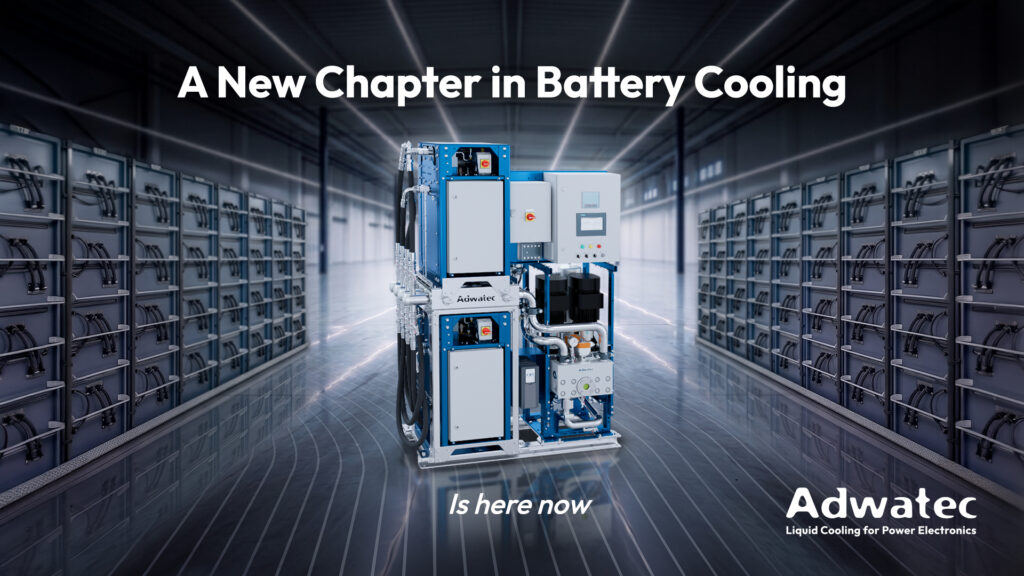
Space is tightly constrained on vessels, and bulky or oversized cooling systems are simply not viable. A well-designed closed-loop system brings together pumps, heat exchangers, temperature sensors, and flow monitors controlled automatically in response to changing heat loads, all within a compact unit. This means shipbuilders and operators can install higher-capacity power electronics without needing to allocate disproportionate space to cooling infrastructure. The marine applications we provide cooling solutions for include propulsion systems, thrusters, winches, and battery and energy storage systems, all of which benefit from this efficiency.
What maintenance does a closed-loop water cooling system require on a vessel?
A closed-loop water cooling system on a vessel requires periodic coolant quality checks, inspection of pumps and heat exchangers, and monitoring of temperature and flow sensors. Compared to open-loop alternatives, the maintenance burden is lower because the sealed circuit keeps contaminants out and reduces wear on internal components.
There are no air filters to replace, and fewer moving parts are exposed to the corrosive marine environment. Consistent coolant conditions reduce the internal degradation that drives unplanned maintenance in less controlled systems. Over the operational life of a vessel, this adds up to lower maintenance costs and fewer unplanned outages, both of which matter significantly when a ship is at sea and access to service is limited.
Why choose Adwatec for marine closed-loop water cooling?
We have been building and refining marine cooling stations since 2007, and our solutions are currently installed on more than 500 vessels globally. That depth of experience shapes every aspect of how we design and deliver cooling systems, from component selection to long-term reliability in demanding conditions.
- Proven marine reliability: DNV type-approved C-series cooling stations accepted for installation on all vessels classed by DNV.
- 25+ years of water cooling expertise: Decades of focused development in power electronics cooling across marine, grid, and industrial applications.
- Modular customisation: Our cooling stations adapt to customer-specific application needs, making it straightforward to match a solution to the vessel’s actual requirements.
- Sustainability commitment: We prioritise the vessel’s technical water system as the primary cooling medium, supporting responsible and efficient operation.
- Competitive lifecycle costs: Compact, correctly sized designs minimise energy use and maintenance demands over the full service life of the installation.
- Ease of integration: Marine approvals, eco-mode control, and straightforward installation reduce the complexity of adding or upgrading cooling on board.
If you are evaluating cooling options for a new build or retrofit project, we are ready to help you find the right solution. Learn why vessel operators choose us for their marine power electronics cooling needs.