Modular cooling systems support growing battery energy storage capacity by allowing operators to add cooling capacity incrementally, matching thermal management to actual system size rather than over-engineering from day one. This approach keeps upfront costs lower, avoids unnecessary footprint, and ensures the cooling infrastructure never becomes the bottleneck as battery capacity expands. The questions below unpack exactly how this works in practice.
What makes modular cooling systems different from fixed designs?
Modular cooling systems are built from independent, stackable units that can be combined, expanded, or replaced individually, whereas fixed designs are engineered as a single integrated unit sized for one specific load. This fundamental difference means modular systems remain adaptable throughout their service life, while fixed designs lock operators into the capacity and configuration chosen at the time of installation.
In practical terms, a fixed cooling station delivers a defined output and nothing more. If the load grows, the entire unit may need replacement. A modular water cooling architecture, by contrast, lets you add capacity by installing additional modules alongside existing ones. Individual units can also be serviced or swapped out without shutting down the entire cooling circuit, which directly supports availability in critical applications like battery energy storage.
How does battery energy storage capacity growth create new cooling demands?
As battery energy storage capacity increases, the heat generated during charging and discharging cycles scales proportionally. Larger battery banks push more current through cells and power electronics, raising thermal loads that the cooling system must handle continuously and precisely. Inadequate cooling at higher capacities accelerates cell degradation and reduces overall system lifespan.
Beyond raw heat load, growth in storage capacity often means adding battery racks in phases rather than all at once. This phased expansion creates a mismatch risk: a cooling system sized for the final configuration is oversized and energy-inefficient early on, while one sized only for the initial phase becomes insufficient as capacity grows. Modular BESS cooling addresses this directly by scaling with the installation rather than ahead of it or behind it.
How can a modular cooling system scale alongside a growing BESS installation?
A modular cooling system scales with a growing BESS installation by allowing additional cooling modules to be integrated into the existing rack or circuit as new battery capacity comes online. Each module operates independently, so the system’s total cooling output grows in defined increments without requiring a complete redesign or replacement of existing equipment.
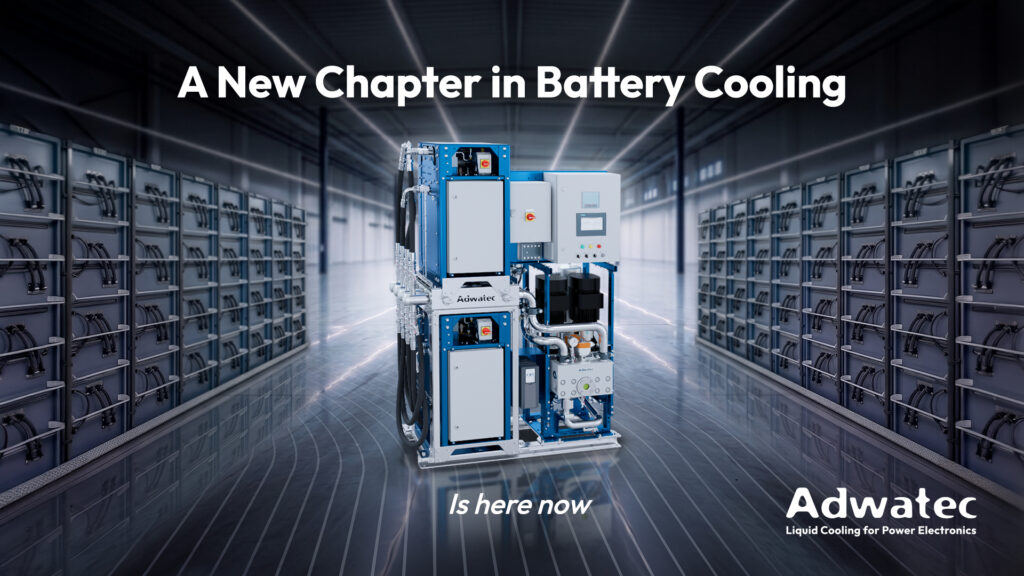
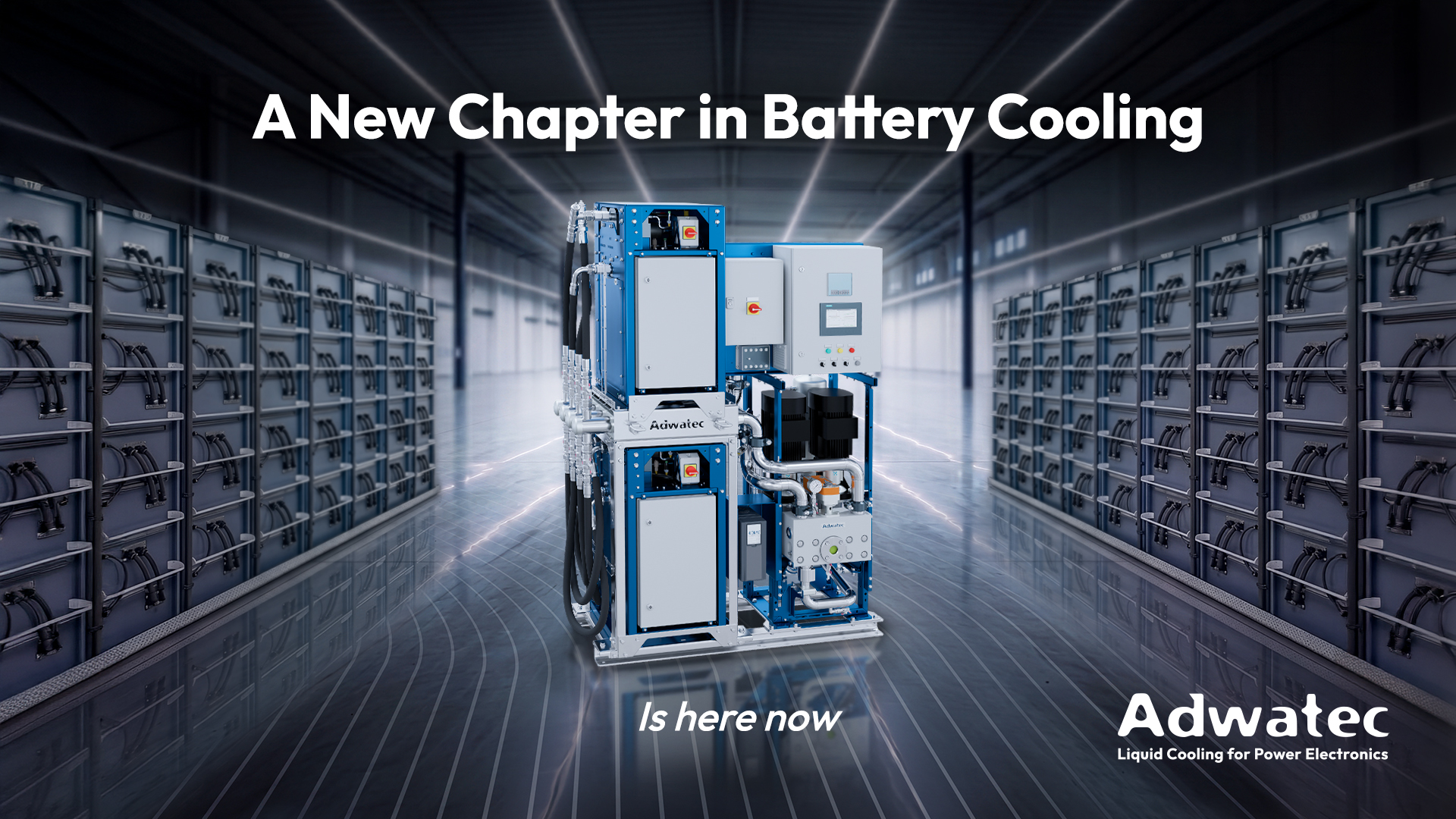
Our CCE Classic Series with Chiller is built around this principle. Standard 20 kW chiller modules are configurable up to a total cooling capacity of 120 kW, and dual modules can be stacked vertically within the rack. When a BESS operator expands storage capacity, additional chiller modules can be added to match the increased thermal load. The modular architecture also provides built-in redundancy: if one unit requires maintenance, the remaining modules continue operating, keeping the battery system online.
What cooling specifications matter most for battery energy storage systems?
The most critical cooling specifications for battery energy storage systems are coolant temperature precision, flow rate consistency, and operating pressure stability. Batteries are sensitive to thermal variation, and even moderate deviations from the target temperature range can accelerate degradation, reduce cycle life, and in extreme cases, create safety risks.
Beyond temperature, flow rate matters because insufficient coolant movement creates hot spots within battery packs even when the average temperature appears acceptable. Pressure control protects seals and connections within the closed-loop circuit. For installations where ambient or technical water temperatures are too high to achieve the required coolant temperature, chiller modules become essential, actively lowering coolant temperature to the level the battery chemistry requires rather than relying on passive heat exchange alone.
When should a BESS operator choose water cooling over air cooling?
A BESS operator should choose water cooling over air cooling when the installation involves high power density, demanding duty cycles, or environments where air cooling cannot reliably maintain the precise temperature range batteries require. Water has significantly higher thermal conductivity than air, making liquid-cooled systems far more effective at removing heat quickly and consistently from power electronics and battery cells.
Air cooling can be adequate for smaller, lower-density installations in controlled environments. However, as battery energy storage capacity grows and discharge rates increase, air cooling struggles to keep pace. Closed-loop water cooling also eliminates the dust, humidity, and contamination risks that come with moving large volumes of air through enclosures, which is particularly relevant in industrial and marine environments where air quality cannot be guaranteed.
How do you select the right modular cooling station for a specific BESS project?
Selecting the right modular cooling station for a BESS project requires matching the station’s cooling capacity, flow rate, and temperature control range to the thermal output of the battery system at its maximum operating load while also accounting for planned future capacity additions. Starting with the battery manufacturer’s thermal specifications gives you the baseline, and the cooling station must meet those requirements with margin to spare.
Key factors to evaluate include:
- Total cooling capacity needed now and at full buildout, so the modular architecture can be sized to grow without full replacement
- Required coolant temperature range, including whether chiller modules are needed to reach lower temperatures than ambient conditions allow
- Flow rate requirements across all battery racks to prevent hot spots
- Redundancy requirements, particularly for applications where downtime is unacceptable
- Physical installation constraints, including available rack space and whether the system needs to be delivered fully assembled or in sub-assemblies
Read more about the solution and explore its key features on the CCE Classic Series with Chiller product page.