Chiller modules improve battery performance on ships by maintaining coolant temperatures below what standard technical water systems can achieve, keeping battery cells within their optimal thermal operating range. Without active cooling, batteries in marine environments are vulnerable to heat-related degradation, reduced capacity, and shortened service life. The sections below unpack the key questions around marine battery cooling, from root causes of overheating to sizing guidance for chiller-based systems.
What causes batteries to overheat on ships?
Batteries on ships overheat primarily because they generate significant heat during charge and discharge cycles, and the ambient conditions in marine engine rooms and battery compartments make passive heat dissipation unreliable. High ambient temperatures, limited airflow, and the compact installation spaces typical of vessels all work against natural cooling. Without an active thermal management system, heat accumulates faster than it can escape.
Lithium-ion battery chemistries, which dominate modern hybrid and fully electric vessels, are particularly sensitive to temperature. Operating above the recommended range accelerates cell degradation, reduces usable capacity, and in extreme cases creates safety risks. On ships, the challenge is compounded by variable load profiles: rapid acceleration of propulsion systems or sudden grid demands can push batteries hard, generating heat spikes that passive or air-based systems struggle to absorb quickly enough.
How do chiller modules work in a marine cooling system?
Chiller modules work by actively refrigerating the coolant in a closed-loop liquid cooling circuit, lowering it to temperatures that technical water alone cannot reach. The cooled liquid circulates through the battery system, absorbing heat from the cells and returning it to the chiller unit for re-cooling. This closed-loop architecture keeps coolant conditions stable and controlled regardless of ambient temperature.
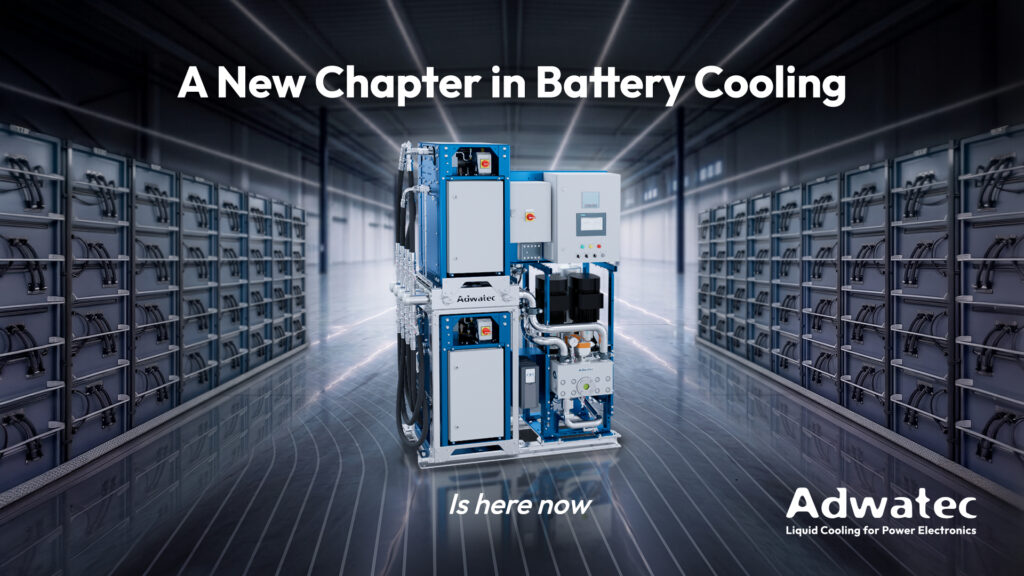
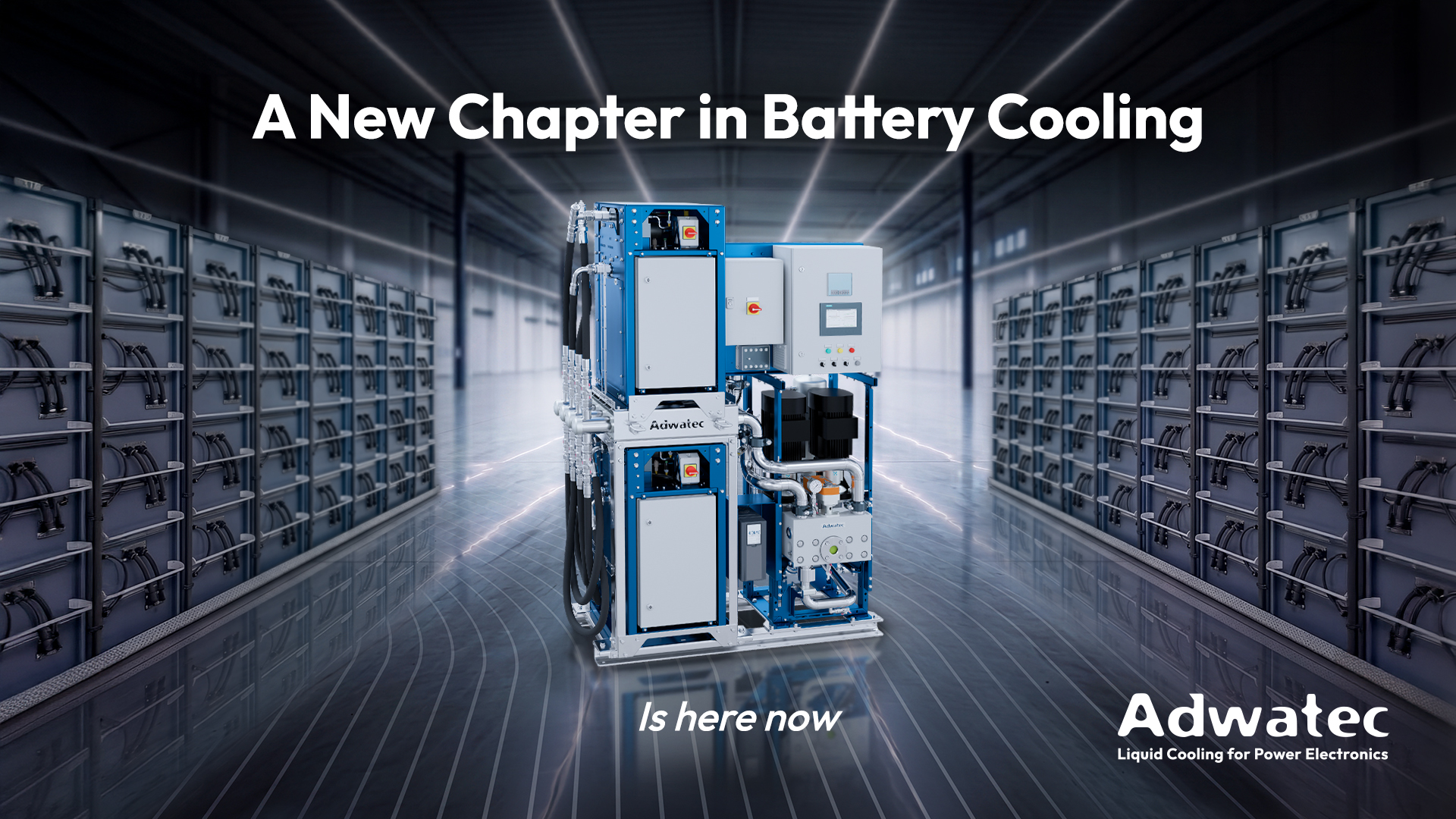
In our CCE Classic Series with Chiller, VFD-controlled chiller modules regulate coolant temperature, flow, and pressure with precision. Each standard chiller unit delivers 20 kW of cooling capacity, and multiple units can be combined within a marine-grade rack up to a total of 120 kW. Because each chiller module operates independently, the system can continue running even if one unit requires maintenance or replacement, which is a critical reliability advantage in marine applications where downtime is costly.
What performance benefits do cooled batteries deliver on ships?
Batteries that operate within their optimal thermal range deliver more consistent power output, retain capacity longer, and have a significantly extended service life. Precise coolant temperature control prevents the cell degradation that accumulates when batteries run hot, meaning the battery system performs closer to its rated specification throughout its operational lifetime.
For hybrid and fully electric vessels, this translates directly into operational reliability. A battery system that maintains stable thermal conditions can support peak power demands during maneuvering, handle regenerative braking energy from thrusters or winches, and sustain shore power supply without the performance drop-off associated with overheated cells. Longer battery life also reduces life cycle costs, since battery replacement is one of the most significant expenses in electric marine propulsion.
What’s the difference between air cooling and liquid cooling for marine batteries?
The key difference is heat transfer capacity. Air cooling relies on airflow across battery surfaces to carry heat away, while liquid cooling circulates a coolant fluid that absorbs heat far more efficiently. Liquid coolant has a much higher thermal conductivity than air, which means it can remove heat faster and maintain tighter temperature uniformity across battery cells.
In marine environments, air cooling faces additional limitations. Engine rooms and battery compartments are often warm, humid, and poorly ventilated, reducing the effectiveness of airflow-based systems. Liquid cooling is also more compact for a given cooling capacity, which matters in the space-constrained installations common on vessels. When chiller modules are added to a liquid cooling circuit, the system gains active temperature control that air cooling simply cannot replicate, making liquid cooling the appropriate choice for high-capacity marine battery systems.
Which ship types benefit most from chiller-based battery cooling?
Hybrid and fully electric vessels benefit most from chiller-based battery cooling, particularly those with large battery banks that handle significant power loads. Ferries, offshore support vessels, platform supply vessels, and coastal cargo ships operating on battery or hybrid power are strong candidates, as are vessels with high-frequency charge and discharge cycles that generate sustained thermal loads.
The marine applications we provide cooling solutions for include propulsion systems, thrusters, winches, and battery and energy storage systems. Any vessel where batteries support or replace diesel propulsion will experience the thermal demands that make chiller-based cooling worthwhile. Shore-based energy storage systems connected to port infrastructure face similar conditions and benefit from the same approach.
How should a marine chiller module be sized for a battery system?
Sizing a chiller module for a marine battery system starts with calculating the heat load the battery generates under worst-case operating conditions, which includes peak discharge rates, charging cycles, and the ambient temperature of the installation space. The chiller system must be able to remove that heat load continuously while keeping coolant within the battery manufacturer’s specified temperature range.
Beyond raw cooling capacity, redundancy is a critical sizing consideration at sea. A system designed with multiple independent chiller modules ensures that a single unit failure does not compromise the entire cooling circuit. Our CCE Classic Series with Chiller is configurable from a single 20 kW module up to 120 kW total capacity, with dual modules stackable vertically within the rack and coolant flow rates up to 717 l/min. This modular architecture makes it straightforward to match cooling capacity to battery size and scale the system as power requirements grow over the vessel’s lifetime.
Read more about the solution and explore its key features on the CCE Classic Series with Chiller product page.