Yes, better coolant control can meaningfully extend marine battery lifespan. Batteries degrade faster when exposed to temperature extremes, inconsistent thermal conditions, or inadequate flow rates, and precise coolant management directly addresses all three. The questions below unpack how thermal control works in practice and what it means for vessels running hybrid or fully electric propulsion.
How does coolant temperature affect marine battery degradation?
Coolant temperature is one of the most direct factors in marine battery degradation. Lithium-based battery cells lose capacity and cycle life when they operate outside their optimal temperature range. Too warm, and chemical reactions inside the cells accelerate irreversibly. Too cold, and internal resistance rises, reducing performance and stressing cells during charge and discharge cycles.
The relationship is not linear. Even modest temperature elevation sustained over time compounds into measurable capacity loss. For marine applications, where batteries may run continuously over long voyages, maintaining coolant at the right setpoint is not a comfort feature, it is a core factor in how many years and cycles the battery system delivers before replacement is needed.
What happens to a marine battery if cooling is inconsistent?
Inconsistent cooling creates uneven temperature distribution across battery cells, which causes some cells to age faster than others. When individual cells degrade at different rates, the overall battery pack capacity is limited by its weakest cells. This imbalance shortens the effective lifespan of the entire system, not just isolated components.
Thermal inconsistency also increases the risk of thermal events during high-demand operations such as port maneuvering or peak propulsion loads. Vessels that experience fluctuating coolant flow or pressure are more exposed to these conditions. Stable, continuous cooling, including during single-unit failures, is therefore essential for both longevity and safety at sea.
How does closed-loop water cooling differ from air cooling for marine batteries?
Closed-loop water cooling circulates coolant directly through or around battery modules in a sealed circuit, removing heat efficiently and consistently. Air cooling relies on moving ambient air across battery surfaces, which is far less thermally conductive and much harder to control precisely in a marine environment where ambient conditions vary significantly.
In a marine context, air cooling also introduces practical challenges: salt-laden air accelerates corrosion, humidity complicates thermal management, and the space constraints of a vessel make large air-handling systems impractical. Closed-loop water cooling keeps the battery environment isolated from the surrounding atmosphere, delivers higher heat transfer capacity per unit volume, and allows much tighter temperature regulation, all of which translate directly into better battery preservation.
What coolant properties matter most for marine battery systems?
For marine battery cooling, the most critical coolant properties are temperature stability, electrical non-conductivity, and compatibility with system materials. Batteries require coolant delivered at consistently low temperatures, often lower than standard technical water can provide without additional chilling. The coolant must also be electrically non-conductive to prevent short circuits if any leakage occurs near live components.
Flow rate and pressure consistency matter equally. Insufficient flow leaves hot spots unaddressed; excessive pressure risks seal integrity over time. A well-designed closed-loop system controls all three variables, temperature, flow, and pressure, as an integrated set rather than managing each in isolation. This integrated control is what separates a purpose-built battery cooling solution from a general-purpose system adapted for the role.
How does eco-mode cooling control help preserve battery life at sea?
Eco-mode cooling control adjusts pump and chiller output dynamically based on actual thermal demand rather than running at fixed capacity. When battery loads are lower, during slow steaming, standby, or port operations, the cooling system scales back accordingly. This reduces thermal cycling stress on both the battery and the cooling equipment itself, which contributes to longer service life for both.
Beyond longevity, eco-mode operation lowers energy consumption during periods when full cooling capacity is not needed. On hybrid and electric vessels where energy efficiency is central to the business case, this matters. VFD-controlled pumps and chiller units that modulate output precisely make eco-mode practical without sacrificing the thermal protection the battery needs when demand rises again.
When should a vessel’s battery cooling system be serviced or upgraded?
A battery cooling system should be serviced at regular intervals defined by the manufacturer, typically aligned with planned maintenance schedules for the vessel. Key service triggers include declining coolant quality, changes in pressure drop across the circuit, unusual temperature readings at the battery interface, or any reduction in chiller output capacity. Waiting for a visible fault is too late, gradual performance loss in the cooling system translates directly into accelerated battery wear.
Upgrades deserve consideration when battery capacity is expanded, when the vessel’s operational profile changes significantly, or when the existing cooling system cannot maintain setpoint temperatures under peak load. Scalable architectures, where chiller modules can be added without replacing the entire cooling station, make upgrades far more practical for both newbuilds and retrofits. A system designed for flexibility from the outset avoids costly full replacements as requirements evolve.
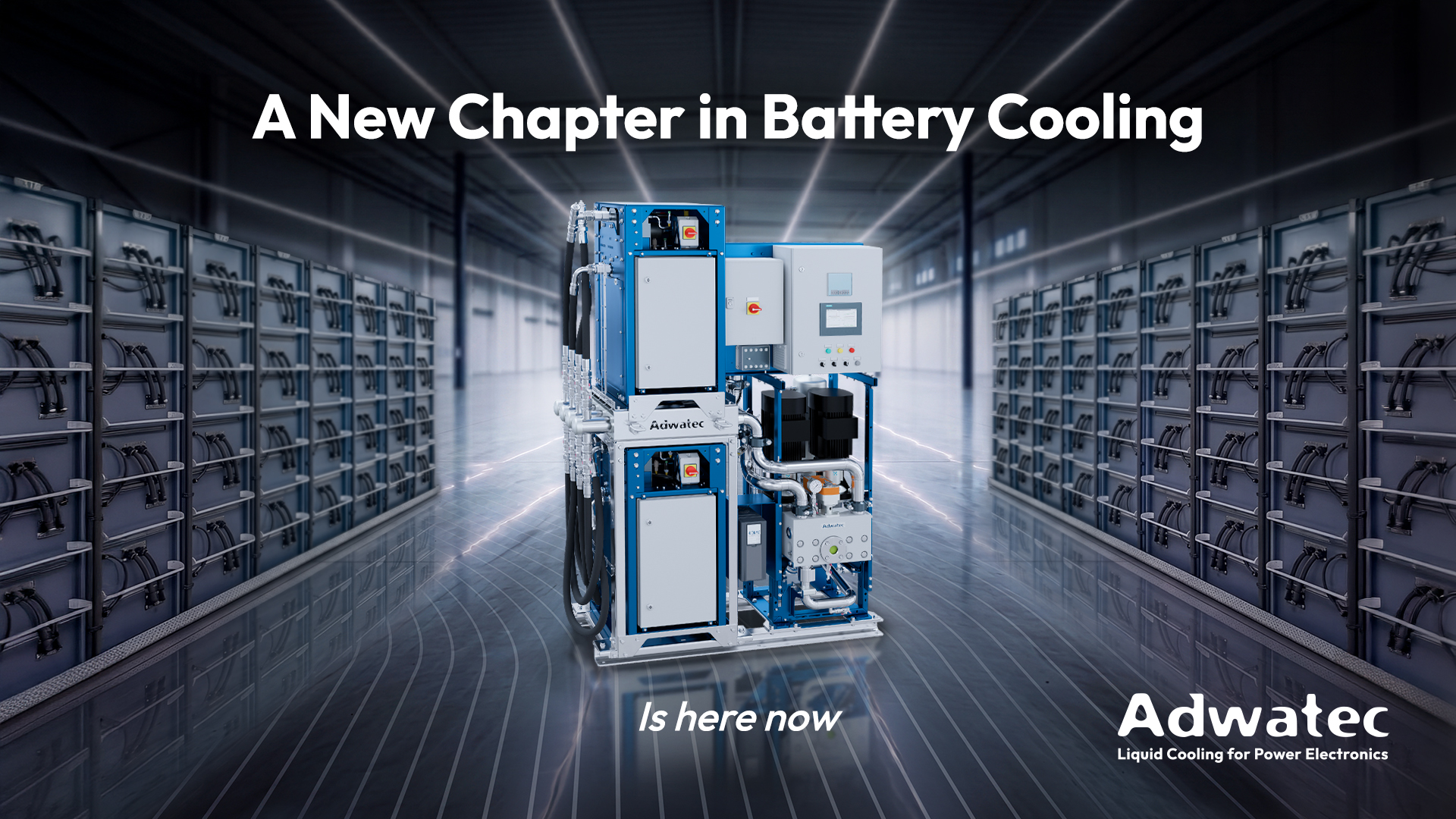
Our CCE Classic Series with Chiller is built specifically for these demands, combining precise temperature, flow, and pressure control with a modular architecture suited to hybrid and fully electric vessels. Read more about the solution and explore its key features on the product page.