As vessels become more sophisticated and power-dense, keeping electronics at safe operating temperatures has become one of the most critical engineering challenges in modern maritime design. Marine water cooling addresses this challenge directly, providing reliable thermal management for the high-performance power electronics that drive propulsion, energy storage, and onboard systems. Understanding how these systems work and why they matter is essential for anyone involved in vessel design, operation, or electrification.
The shift toward electrified and hybrid vessels has only intensified the demand for effective marine cooling systems. Where older vessels relied on simpler thermal arrangements, today’s ships carry sophisticated power electronics that generate significant heat and require precise, continuous cooling to operate safely and efficiently.
How water cooling works on modern vessels
Water cooling on modern vessels operates on a closed-loop principle: a coolant circulates through a dedicated circuit, absorbing heat from power electronics and transferring it away before returning to repeat the cycle. This closed-loop approach keeps the coolant clean, controlled, and isolated from the marine environment, which is essential for protecting sensitive components.
The primary cooling source is the vessel’s own technical water system, which provides a reliable and consistent heat sink for the cooling circuit. Seawater is used as a secondary option only when technical water is unavailable. This hierarchy is deliberate: technical water offers a more stable and controllable medium, supporting consistent thermal performance across varying operating conditions.
Key components of a marine cooling system
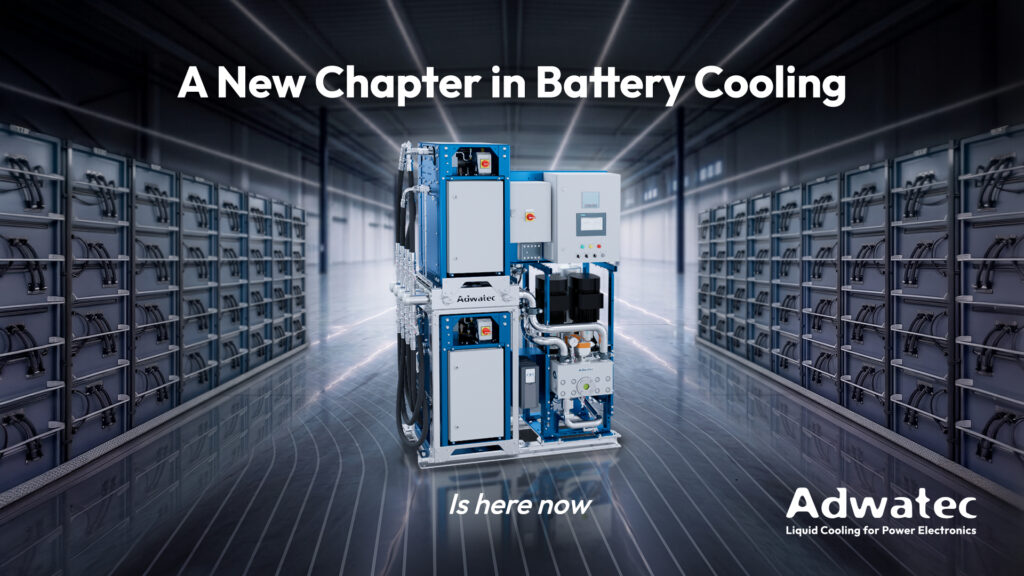
A complete liquid cooling marine installation brings together several interconnected components, each playing a specific role in maintaining thermal stability. The cooling station sits at the heart of the system, managing coolant flow, pressure, and temperature regulation throughout the circuit.
- Cooling station: The central unit that circulates coolant, monitors system parameters, and maintains the correct operating conditions.
- Heat exchanger: Transfers heat from the closed-loop coolant to the vessel’s technical water system.
- Pumps and valves: Control coolant flow and pressure throughout the circuit, ensuring consistent delivery to all cooled components.
- Sensors and controls: Monitor temperature, flow rate, and system status, enabling automated responses and eco-mode operation to reduce energy consumption during periods of lower load.
The modularity of well-designed cooling stations is particularly valuable in marine environments, where space is limited and installation conditions vary significantly from vessel to vessel.
Marine applications driving demand for liquid cooling
The range of power electronics requiring active cooling aboard modern vessels has expanded considerably as electrification advances. The marine applications we provide cooling solutions for include propulsion systems, thrusters, winches, and battery and energy storage systems. Each of these generates substantial heat under operational loads, and each demands reliable thermal management to function safely.
Battery and energy storage systems, in particular, have become a major driver of demand for power electronics cooling in the marine sector. As more vessels adopt hybrid and fully electric configurations, the volume and density of onboard electronics increases, making closed-loop water cooling not just beneficial but essential for safe, long-term operation.
DNV approval and marine certification standards
Operating in the marine environment means meeting strict certification requirements, and cooling systems are no exception. DNV type approval is one of the most recognised standards in the industry, confirming that a cooling station meets the structural, functional, and safety requirements for installation aboard classed vessels.
DNV-approved cooling stations are accepted for installation on all vessels classed by DNV, which simplifies the approval process for shipbuilders and system integrators. This certification covers not only the hardware but also the system’s ability to perform reliably under the demanding conditions found at sea, including vibration, humidity, and fluctuating loads. For vessel operators, choosing certified equipment reduces regulatory risk and supports smoother classification processes.
Efficiency and maintenance advantages at sea
Beyond thermal performance, vessel cooling solutions based on closed-loop water cooling offer meaningful operational advantages over the lifetime of a vessel. Compact, correctly sized designs reduce both the physical footprint and the energy required to run the system, which matters in environments where space and power budgets are tightly managed.
Eco-mode control allows the system to reduce energy consumption automatically during periods of lower thermal load, contributing to overall vessel efficiency. Closed-loop systems also limit the exposure of internal components to contaminants, which reduces wear and extends service intervals. For operators managing vessels across long voyages or remote routes, lower maintenance requirements translate directly into reduced downtime and operating costs.
As the maritime industry continues its transition toward electrification, the role of reliable, efficient cooling will only grow. Investing in well-engineered marine water cooling from the outset is one of the most practical steps toward long-term operational performance.

About Adwatec
Adwatec is a water technology company specializing in water cooling for power electronics. We serve clients across various sectors, including Marine, Electrical Grid and Heavy Industry, on a global scale. With more than two decades of expertise and strong focus in R&D, we offer our clients proven, state-of-the-art solutions.
Our mission is to boost Sustainability in our products, operations and customer’s applications. In order to achieve this our deep knowledge of various customer applications is essential and we are not afraid to share the cooling aspects in these. Adwatec products are modular which allows us to customize the cooling solutions to customer specific application needs. Standard modules in high volumes, small size and low maintenance result in competitive lifecycle costs. Adwatec products installed onboard more than 500 vessels globally is a reference that we are truly proud of!