Operating at sea places extraordinary demands on every system aboard a vessel. Power electronics face salt air, vibration, humidity, and wide temperature swings, all while being expected to perform without interruption. Effective marine water cooling systems are not a luxury in this environment; they are the engineering foundation that keeps propulsion and power electronics running safely, voyage after voyage.
The marine applications we provide cooling solutions for include propulsion systems, thrusters, winches, and battery and energy storage systems. Each of these generates significant heat under load, and managing that heat reliably is what separates a well-engineered vessel from one that faces costly, unplanned downtime.
The harsh conditions power electronics face at sea
Vessel power electronics operate in one of the most punishing environments imaginable. Constant mechanical vibration, corrosive salt-laden air, and high ambient humidity all accelerate the degradation of sensitive components. At the same time, load profiles at sea are rarely steady, with propulsion demands spiking during maneuvering, heavy weather, or dynamic positioning operations.
Heat is the primary enemy of electronic longevity. When power semiconductors, inverters, and converters run hot beyond their design thresholds, insulation degrades, solder joints fatigue, and component failure becomes a matter of when rather than if. Protecting these components from thermal stress is therefore one of the most critical engineering challenges in modern vessel design.
How closed-loop liquid cooling keeps marine electronics safe
Closed-loop cooling is the most effective method for managing heat in demanding marine power electronics applications. Rather than exposing sensitive components to raw water sources, a closed-loop cooling circuit circulates a controlled coolant through the system in a sealed loop, absorbing heat from the electronics and transferring it away without any direct contact between the coolant and the components themselves.
The primary cooling source in a closed-loop marine system is the vessel’s own technical water supply. Seawater serves only as a secondary backup when technical water is unavailable, ensuring that the cooling circuit remains clean, chemically stable, and free from the corrosive and biological contaminants that raw seawater carries. This approach significantly extends the service life of both the cooling hardware and the power electronics it protects.
Key components of a marine cooling station
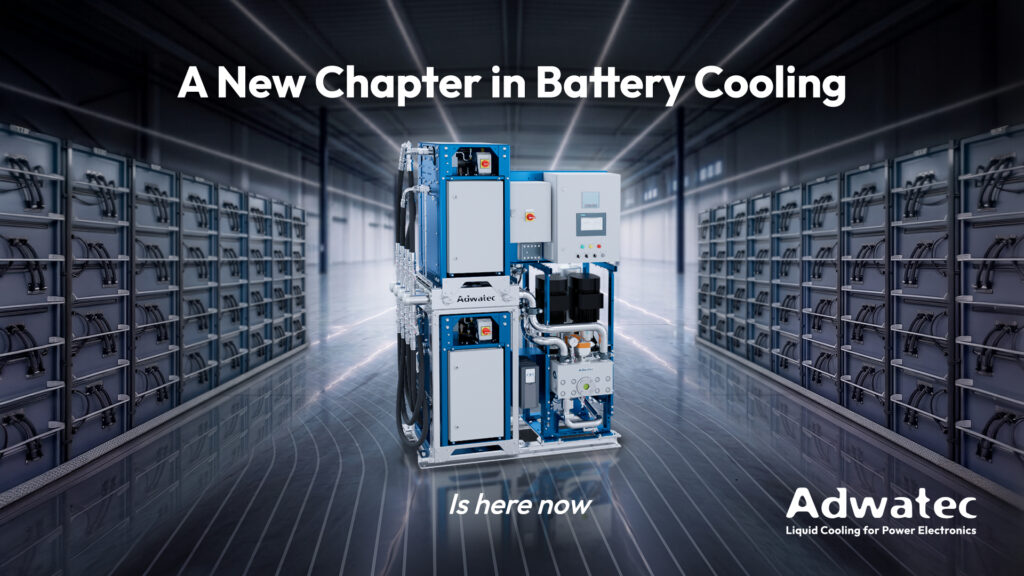
A marine cooling station brings together several critical subsystems that work in concert to maintain stable coolant conditions under all operating scenarios.
- Circulation pumps maintain consistent coolant flow through the closed loop, ensuring heat is continuously removed from the electronics.
- Heat exchangers transfer absorbed heat from the closed-loop coolant to the vessel’s technical water supply.
- Expansion vessels and pressure control components accommodate thermal expansion of the coolant and maintain stable system pressure.
- Filtration and water quality management keep the coolant free from particles and maintain the correct chemical properties, which is especially important in deionized water systems used with high-voltage equipment such as Static Var Compensators.
- Control and monitoring systems provide real-time oversight of temperatures, pressures, and flow rates, enabling early detection of any deviation from normal operating conditions.
The sizing and configuration of these components directly affect both cooling performance and the overall footprint of the installation, which is why a compact, correctly dimensioned design matters as much as raw cooling capacity.
Reliability and compliance standards for marine cooling
Marine environments demand that every piece of equipment meets rigorous safety and reliability standards before it ever goes aboard a vessel. Classification societies such as DNV set detailed requirements for how cooling systems must be designed, tested, and documented to receive type approval for installation on classed vessels.
Type-approved liquid cooling marine solutions give shipbuilders and operators confidence that the equipment has been independently verified to withstand the mechanical, thermal, and operational stresses of life at sea. Beyond classification requirements, quality management certifications such as ISO 9001 ensure that manufacturing processes consistently deliver products that meet specifications, reducing the risk of field failures caused by production variability.
Long-term efficiency gains from proper cooling design
Getting the cooling design right from the start pays dividends across the entire operational life of a vessel. Oversized cooling systems waste energy and take up valuable space; undersized ones create thermal bottlenecks that shorten component life and increase maintenance frequency. A correctly sized propulsion cooling system operates within its optimal range, consuming only the energy needed and leaving room for load variation without thermal compromise.
Features such as eco-mode control allow the cooling station to reduce pump speeds and energy consumption during lighter load periods, contributing to lower operational costs over time. Easy installation design and modular architecture also reduce both initial commissioning time and the complexity of future servicing, which matters significantly in a marine context where every hour in port carries a cost.
As vessel electrification continues to advance in 2026, with more hybrid and fully electric propulsion systems entering service, the role of well-engineered power electronics cooling will only grow in importance. Investing in a robust cooling design is not just about protecting today’s hardware; it is about building a foundation that supports the increasingly electrified vessels of tomorrow.

About Adwatec
Adwatec is a water technology company specializing in water cooling for power electronics. We serve clients across various sectors, including Marine, Electrical Grid and Heavy Industry, on a global scale. With more than two decades of expertise and strong focus in R&D, we offer our clients proven, state-of-the-art solutions.
Our mission is to boost Sustainability in our products, operations and customer’s applications. In order to achieve this our deep knowledge of various customer applications is essential and we are not afraid to share the cooling aspects in these. Adwatec products are modular which allows us to customize the cooling solutions to customer specific application needs. Standard modules in high volumes, small size and low maintenance result in competitive lifecycle costs. Adwatec products installed onboard more than 500 vessels globally is a reference that we are truly proud of!