Essential marine cooling systems are classified as critical to vessel safety and operation, requiring redundancy and continuous operation even during emergencies. Non-essential cooling systems support comfort and auxiliary functions that can be temporarily shut down without compromising vessel safety or navigation capabilities.
Inadequate cooling redundancy is costing you vessel downtime and safety compliance
When marine cooling systems lack proper redundancy planning, vessels face unexpected shutdowns that can cost thousands of dollars per day in lost operations. Critical power electronics, propulsion systems, and navigation equipment depend on continuous cooling to prevent overheating damage. Without backup cooling capacity, a single component failure can force emergency port calls, delay cargo deliveries, and trigger costly insurance claims. The solution is to implement redundant cooling circuits with automatic switchover capabilities that ensure continuous operation even when primary systems fail.
Misclassifying cooling system importance signals deeper operational risks
Many vessel operators underestimate which cooling systems truly qualify as essential, leading to inadequate maintenance schedules and insufficient spare parts inventory. This misclassification creates blind spots where seemingly minor cooling failures cascade into major operational disruptions. When thruster cooling fails during critical maneuvering or battery cooling systems overheat during power management, the consequences extend far beyond the immediate equipment damage. Address this by conducting a comprehensive cooling system audit that maps each system’s impact on vessel safety and operations, then aligning maintenance and redundancy strategies accordingly.
Which marine systems require essential cooling classification?
Essential marine cooling systems include propulsion motors, steering gear, emergency generators, fire pumps, navigation equipment, and critical power electronics. These systems must maintain continuous operation for vessel safety and are subject to strict classification society requirements for redundancy and reliability.
The marine applications we provide cooling solutions for include propulsion systems, thrusters, winches, and battery and energy storage systems. Main propulsion cooling systems receive essential classification because propulsion loss can create dangerous situations, especially in confined waters or heavy traffic areas. Similarly, steering gear cooling systems are essential since loss of steering control poses immediate safety risks.
Emergency systems like fire pumps, emergency generators, and bilge pumps also require essential cooling classification. These systems must operate reliably during emergencies when other vessel systems may be compromised. Navigation and communication equipment cooling often receives essential status because these systems are critical for safe passage and regulatory compliance.
How do redundancy requirements differ between essential and non-essential cooling?
Essential cooling systems require full redundancy with automatic backup activation, while non-essential systems typically need only spare capacity or manual backup procedures. Essential systems must maintain cooling even during single-point failures, requiring duplicate pumps, heat exchangers, and control systems.
For essential systems, classification societies mandate 100% backup capacity that activates automatically when primary systems fail. This means duplicate cooling pumps, redundant heat exchangers, and independent power supplies. The backup systems must be physically separated to prevent common-mode failures and regularly tested to ensure reliability.
Essential cooling systems primarily use the vessel’s technical water supply as the cooling medium. When technical water is unavailable, seawater serves as a secondary cooling option. This ensures continuous cooling availability while maintaining optimal system performance.
Non-essential cooling systems have more flexible redundancy requirements. Air conditioning systems, galley equipment cooling, and crew accommodation HVAC can operate with reduced capacity during emergencies. These systems often use shared spare pumps or manual backup procedures rather than automatic redundancy.
What happens when essential cooling systems fail on a ship?
Essential cooling system failures trigger automatic alarms, emergency procedures, and potential vessel shutdown to prevent equipment damage and safety hazards. Depending on the affected system, consequences range from reduced operational capability to complete loss of propulsion or power generation.
When propulsion cooling fails, engines automatically reduce power or shut down to prevent thermal damage. This can leave vessels dead in the water, requiring emergency towing or anchor deployment while repairs are completed. In congested waterways or severe weather, propulsion loss creates immediate safety risks requiring Coast Guard assistance.
Power generation cooling failures affect electrical systems throughout the vessel. Emergency generators must activate to maintain essential services like navigation lights, communication equipment, and emergency pumps. However, if emergency generator cooling also fails, vessels face complete power loss with serious safety implications.
Modern vessels have sophisticated monitoring systems that provide early warning of cooling system problems. These systems track temperatures, flow rates, and pump performance to identify issues before complete failure occurs. When problems are detected, vessels can adjust operations, activate backup systems, or seek port facilities for repairs before critical failures develop.
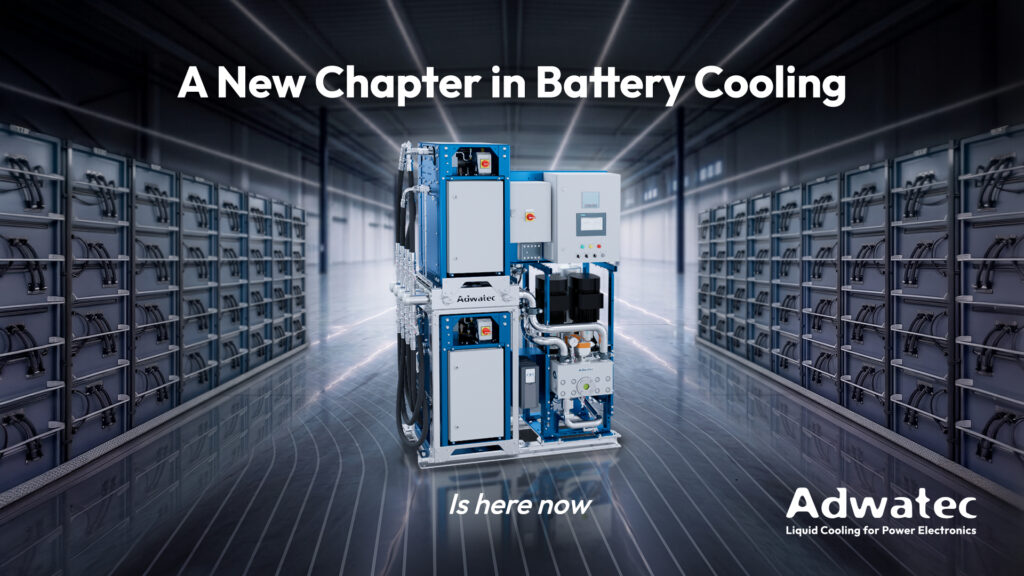
At Adwatec, we have developed specialized cooling solutions for demanding industrial applications over our 25+ years of experience. The marine applications we provide cooling solutions for include propulsion systems, thrusters, winches, and battery and energy storage systems. We provide solutions using primarily the vessel’s technical water system, with seawater as a secondary option when technical water is unavailable. Our modular cooling stations enable precise thermal management that maximizes power electronics performance while minimizing space and energy requirements. Learn more about why you should choose us for your next cooling project.