Grid stability depends on precise reactive power management, and STATCOM cooling systems are one of the less visible but critically important parts of that equation. A Static Synchronous Compensator generates significant heat as it continuously regulates voltage and compensates reactive power across transmission and distribution networks. Without an effective cooling strategy, the power electronics inside a STATCOM unit cannot sustain the performance levels that grid operators depend on. This article explores the thermal demands of STATCOM operation, why liquid cooling has become the standard approach, and what design factors determine whether a cooling system truly protects grid stability.
The thermal demands inside a STATCOM unit
STATCOMs rely on high-power semiconductor devices, typically insulated gate bipolar transistors (IGBTs), to perform rapid reactive power compensation. These components switch at high frequencies and carry substantial currents, producing concentrated heat loads that must be managed continuously and reliably. The challenge is not just the peak heat generated, but the consistency of thermal management across variable load conditions.
Unlike equipment that operates at steady state, a STATCOM responds dynamically to grid fluctuations, meaning its thermal load can shift quickly and unpredictably. Junction temperatures inside power semiconductor modules must stay within tight limits at all times. Exceeding those limits even briefly accelerates material fatigue and can lead to component failure. Effective power electronics cooling for a STATCOM must therefore handle both sustained heat dissipation and rapid thermal transients without compromise.
Why liquid cooling outperforms air cooling for STATCOMs
Air cooling is simply not well suited to the heat density that modern STATCOM units produce. The thermal conductivity of water is roughly 25 times greater than that of air, which means liquid cooling can remove far more heat from a smaller surface area. For high-power reactive power compensation equipment, this difference is decisive.
STATCOM liquid cooling allows semiconductor modules to operate closer to their optimal temperature range, which directly extends service life and reduces the frequency of maintenance interventions. Air-cooled systems require larger enclosures to accommodate the necessary airflow, while liquid-cooled designs can be significantly more compact. In grid infrastructure projects where space and weight constraints are real factors, that compactness translates into lower installation costs and simpler integration with existing substation layouts.
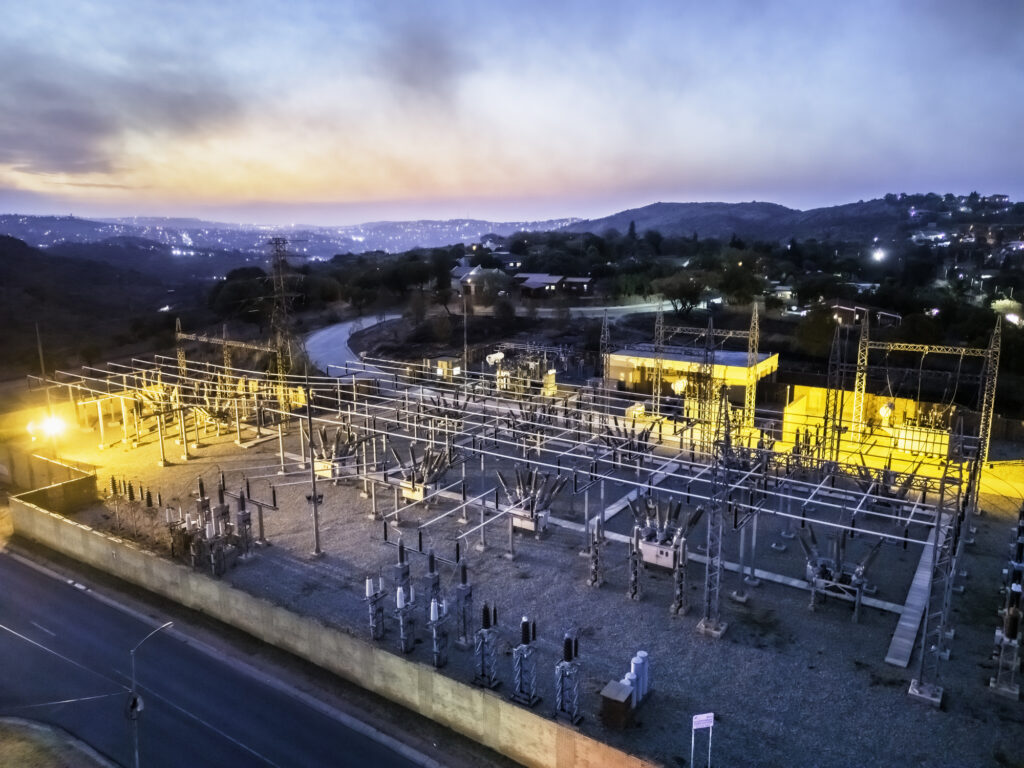
Liquid cooling also provides much better isolation from the external environment. Substations in coastal, industrial, or high-humidity locations expose equipment to contaminants and corrosive atmospheres. A properly sealed liquid cooling circuit removes the thermal management function from the ambient environment entirely, which is a meaningful advantage for long-term reliability.
How closed-loop water cooling keeps STATCOMs stable
A closed-loop cooling circuit is the preferred architecture for cooling station STATCOM applications because it separates the cooling water from any external contamination sources. The same treated water circulates continuously between the cooling station and the power electronics, maintaining consistent thermal and chemical properties over time.
In reactive power compensation applications, water quality is particularly important. The power electronics inside a STATCOM operate at high voltages, which means the cooling water must have very low electrical conductivity to prevent leakage currents. This is why deionized water is commonly used in these systems. A well-designed closed-loop circuit includes continuous monitoring and conditioning of the water to maintain the required resistivity levels, protecting both the electronics and the cooling infrastructure itself.
The closed-loop approach also enables precise temperature control. By regulating flow rates and heat exchanger performance, the cooling station can maintain semiconductor junction temperatures within a narrow band regardless of external ambient conditions or load variation. This stability is what allows a STATCOM to deliver consistent reactive power compensation performance across all operating scenarios.
Key design factors in STATCOM cooling stations
Several design parameters determine how effectively a cooling station supports STATCOM operation over its full service life. Getting these right at the specification stage avoids costly retrofits and performance gaps later.
- Flow rate and pressure control: The cooling station must deliver consistent flow across the entire power electronics assembly, ensuring no hot spots develop in areas with restricted circulation.
- Water quality management: Deionized water systems require ion exchange resin beds, conductivity sensors, and automatic alerts to maintain the low conductivity levels that high-voltage electronics demand.
- Redundancy: Grid-connected equipment rarely has the option of planned downtime. Pump redundancy and bypass configurations allow maintenance without interrupting cooling.
- Thermal sizing: The cooling station must be sized for peak heat rejection, not average load. Undersizing creates thermal stress during high-demand periods, which is precisely when grid support is most critical.
- Environmental adaptability: Cooling stations serving outdoor or harsh-environment substations need appropriate enclosure ratings and materials to maintain performance without excessive maintenance.
Modularity plays an important role here as well. A modular cooling station design allows the system to be configured precisely for the STATCOM’s actual heat load and installation conditions, avoiding both over-engineering and under-performance.
Cooling system failures and their grid-level consequences
A cooling system failure in a STATCOM does not just affect the unit itself. It can remove reactive power support from a section of the grid at exactly the moment it is needed most, with consequences that ripple outward through voltage stability and power quality.
When semiconductor temperatures rise above safe limits, protection systems will shut the STATCOM down to prevent irreversible damage. In a grid with limited reactive power reserves, that sudden loss of compensation capacity can cause voltage sags, increased reactive power demand on other assets, and in severe cases, cascading instability. The cooling system is therefore not a secondary consideration but a direct factor in grid resilience.
Proactive monitoring of cooling system parameters, including water temperature, flow rate, conductivity, and pressure, provides early warning of developing issues before they escalate to a shutdown event. Modern cooling stations with integrated monitoring can communicate with SCADA systems, allowing grid operators to act on cooling anomalies as part of their broader asset management strategy. Investing in reliable water cooling for power electronics is, in this sense, an investment in the grid stability the STATCOM was installed to provide.
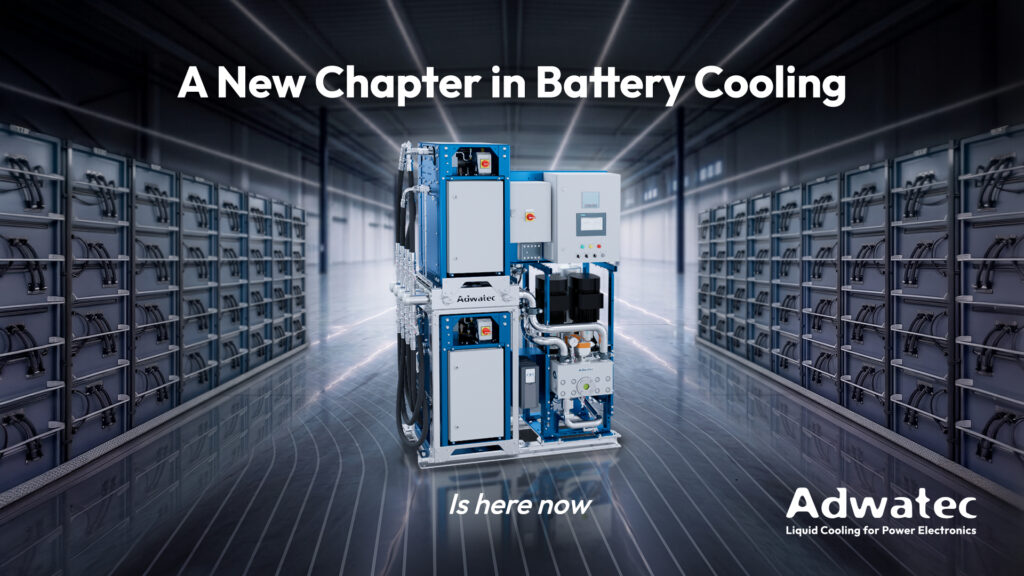
At Adwatec, we design and manufacture water cooling stations specifically for demanding power electronics applications, including STATCOM and other grid-connected systems. With over 25 years of water cooling experience and solutions currently cooling more than 5,000 MW of power electronics worldwide, we understand the thermal and operational requirements that grid infrastructure demands. Our L series cooling stations are built for deionized water applications and are engineered to maintain the water quality and temperature precision that high-voltage reactive power equipment requires. If your project involves STATCOM cooling or other grid-level power electronics, we are ready to help you find the right solution.