Closed-loop cooling for marine power systems uses a sealed circuit of coolant that continuously circulates to remove heat from power electronics without exposure to seawater or outside contaminants. This method provides consistent cooling performance, protects sensitive equipment from corrosion, and ensures reliable operation in harsh marine environments where traditional air cooling fails.
Inadequate cooling is destroying your marine power electronics faster than you realize
When marine power systems overheat, you face cascading failures that cost far more than just replacement parts. Overheated inverters, converters, and drive systems fail without warning, leaving vessels stranded or forcing emergency port calls that can cost thousands per day. Heat damage also reduces component lifespan by up to 50%, turning what should be 10-year investments into expensive 5-year replacements. The solution is to implement proper thermal management from the start rather than waiting for the first failure to force your hand.
Saltwater corrosion is silently compromising your cooling effectiveness
Traditional open cooling systems expose your equipment to salt-laden air and moisture that gradually corrode heat exchangers and clog cooling passages. This corrosion reduces heat transfer efficiency by 20-30% within just two years, forcing your power systems to operate at dangerous temperatures even when cooling fans run at full speed. Switching to a closed-loop system eliminates saltwater exposure entirely, maintaining consistent cooling performance throughout the equipment’s operational life while reducing maintenance costs and unexpected downtime.
What is closed-loop cooling for marine power systems?
Closed-loop cooling is a sealed cooling system that circulates coolant through a continuous circuit to remove heat from marine power electronics. The coolant operates in a controlled environment, preventing contamination and corrosion while maintaining consistent thermal performance.
This cooling method creates a controlled environment where coolant properties remain stable throughout operation. The system uses a heat exchanger to transfer heat from the circulating coolant, typically using the ship’s technical water as the primary cooling medium. When technical water is unavailable, seawater serves as a secondary option. This approach protects sensitive power electronics from environmental exposure while ensuring reliable heat removal in challenging marine conditions.
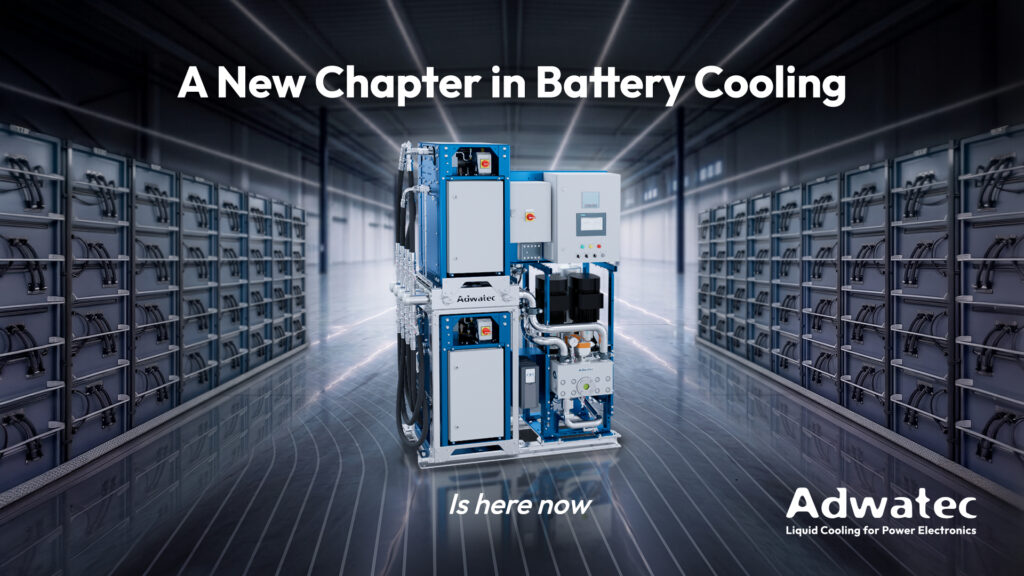
The marine applications we provide cooling solutions for include propulsion systems, thrusters, winches, and battery and energy storage systems. These systems generate substantial heat during operation, requiring precise thermal control to operate safely and efficiently throughout their design life.
How does a closed-loop cooling circuit work on ships?
A marine closed-loop cooling circuit pumps coolant through power electronics to absorb heat, then transfers that heat through a heat exchanger using the ship’s technical water system as the primary cooling medium. When technical water is unavailable, seawater serves as a secondary cooling option. The coolant never mixes with the cooling medium, maintaining system integrity and performance.
The process begins when a circulation pump moves coolant through cooling plates or heat sinks mounted directly on power electronic components. As the coolant flows through these heat exchangers, it absorbs thermal energy from the electronics. The heated coolant then travels to a heat exchanger where it releases this thermal energy to the ship’s technical water system or, when necessary, to seawater through the vessel’s hull or dedicated sea chest connections.
Temperature sensors and control systems monitor coolant temperature throughout the circuit, adjusting pump speed and flow rates to maintain optimal operating temperatures. This automated control ensures consistent cooling performance regardless of ambient conditions or power load variations.
What are the main components of marine closed-loop cooling systems?
Marine closed-loop cooling systems consist of circulation pumps, heat exchangers, expansion tanks, temperature sensors, and control units. These components work together to maintain proper coolant flow, temperature control, and system pressure throughout the cooling circuit.
The circulation pump serves as the system heart, moving coolant through the entire circuit at the required flow rate and pressure. Heat exchangers include both the component-mounted cooling plates that remove heat from electronics and the primary heat exchanger that rejects heat to the ship’s technical water system. The expansion tank accommodates coolant volume changes due to temperature fluctuations while maintaining proper system pressure.
Temperature and pressure sensors provide continuous monitoring data to the control unit, which automatically adjusts pump speeds, valve positions, and alarm settings. Modern systems also include filtration components to maintain coolant purity and corrosion inhibitors to protect internal surfaces from degradation over time.
How do heat exchangers transfer heat in marine cooling systems?
Heat exchangers use conductive heat transfer through metal plates or tubes to move thermal energy from the hot coolant to the ship’s technical water system or, when technical water is unavailable, to seawater. The coolant and cooling medium flow on opposite sides of these heat transfer surfaces, allowing efficient heat exchange without fluid mixing.
Why is closed-loop cooling better than air cooling for marine power electronics?
Closed-loop cooling outperforms air cooling in marine environments because it provides consistent heat removal regardless of ambient conditions, protects electronics from salt corrosion, and operates quietly without large ventilation fans. Air cooling systems struggle with high humidity, salt contamination, and limited airflow in ship compartments.
Marine environments present unique challenges for air cooling systems. High humidity reduces air’s heat-carrying capacity, while salt-laden air accelerates corrosion of electronic components and heat sinks. Air cooling also requires significant ventilation space and powerful fans that consume energy and create noise pollution in crew areas.
Water cooling provides superior heat transfer efficiency, removing heat 25 times more effectively than air per unit volume. This efficiency allows for more compact cooling solutions that fit better in space-constrained marine installations. We design our marine cooling stations specifically to address these challenges, offering DNV-approved solutions that ensure reliable operation in demanding maritime conditions.
What types of marine power systems require closed-loop cooling?
High-power marine systems, including propulsion motor drives, energy storage systems, power converters, and shore connection equipment, require closed-loop cooling. These systems generate substantial heat loads that exceed air cooling capabilities while requiring protection from marine environmental conditions.
Electric and hybrid propulsion systems represent the largest cooling loads on modern vessels. Motor drives for azimuth thrusters, pod drives, and main propulsion motors can generate hundreds of kilowatts of waste heat that must be removed continuously. Energy storage systems, particularly large battery banks for electric vessels, also require precise temperature control to maintain performance and prevent thermal runaway.
Power conversion equipment such as frequency converters, rectifiers, and shore power connections generate concentrated heat loads in relatively small spaces. Static VAR compensators and other power quality equipment also benefit from closed-loop cooling to maintain stable operation. These systems often require deionized water cooling to prevent electrical conductivity issues, making closed-loop systems with proper water treatment essential for safe operation.